Consumers price index
Inflation rises to 2.5%pa, imported inflation pressures reappear
17 Apr 2025

Our take on the latest Consumers price index (Thu 17 Apr 2025)


Annual inflation up to 2.5%pa
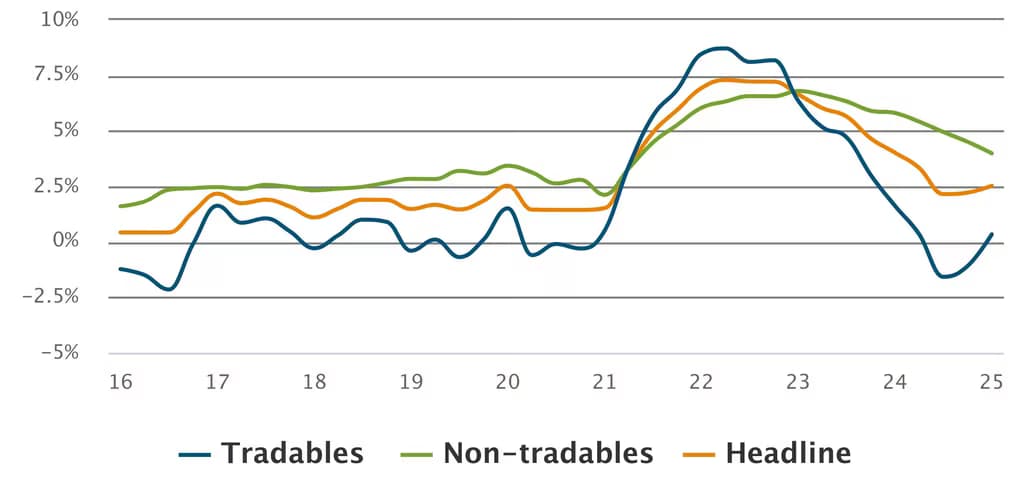
Tradable prices up 0.3%pa
Non-tradable inflation down to 4.0%pa, 0.2ppts above RBNZ forecast
The key numbers...
- Quarterly inflation of 0.9% pushed annual headline inflation up to 2.5% in March 2025, slightly higher than market expectations of 2.3%pa.
- Tradable prices rose 0.8% in the March 2025 quarter, the fastest rise since September 2023. The annual rate of tradables inflation had turned negative during the second half of 2024, but it is now back in positive territory, at 0.3%pa.
- Non-tradable domestic prices rose 1.1% in the March 2025 quarter, driven by policy changes in tertiary and other post-school education which rose 23%pa. Fees free for the first year of study or training finished at the end of 2024, moving to the third year of study instead. With third-year students only eligible from 2027 (because third-year students this year and next year will have had their fees paid in first year), more students are now paying the full study cost.
- Goods inflation reaccelerated, after previous quarterly rises in inflation had been driven by the services component. Quarterly goods inflation was 1.1%, the highest rate since September 2023, whereas services inflation was 0.7%, slowing from 1.4% in the previous quarter.
- Rents remained a key contributor to higher prices, rising 3.7%pa in the March quarter, although the annual rise has eased for three consecutive quarters to the slowest rate since September 2021. Central and local government charges rose 10.7%pa in March 2025, the fastest rise on record (since 1989).
Inflation ticks up to 2.5%pa, tradables turn positive again
CPI components, annual % changes
...and our reaction
- We have communicated rising concerns of inflationary pressures re-emerging in 2025 in our latest forecasts, particularly on the tradables side. The rise could be largely due to the weaker exchange rate we have seen in 2025, which drives import prices higher.
- On the non-tradables side, domestic pricing pressures appeared to be gradually easing over recent quarters, but ticked up to 1.1% in March from 0.7% in the December quarter. At 4.0%pa, domestic inflation continues to sit well above the 2.7%pa averaged during the 2010s, and it was 0.2 percentage points above the Reserve Banks estimate of 3.8%pa.
- There are a few more critical higher costs hitting households. Household energy prices rose 7.2%pa, the highest rate since December 2008 (excluding the GST change in the early 2010s). There will be further rises, particularly to household electricity bills, driven by a combination of higher lines and transmission charges and retailers hiking prices following the dry winter last year. Telecommunications services also rose 6.2%pa, the highest rate on record (since 1999).
- Although inflation remains within the Reserve Bank’s 1-3%pa target band, pressures emerging may raise some concerns, particularly with the effects of the ongoing trade war yet to come through. We do not expect today’s figures to dissuade the Bank from further cuts to the official cash rate over the next three months, but the scope for further cuts to the official cash rate below 3% is still highly questionable.
Latest updates
Premium

Consumers price index
Fuel price spike sends annual inflation to 4.1%pa
Tue 21 Jul 2026
Quarterly
4.1%pa Annual inflation rises in June 2026 2.9%pa Inflation excl fuel slowed1.6% Building costs up in June 2026 quarter
Premium
Consumers price index
Inflation still high going into fuel price shock
Tue 21 Apr 2026
Quarterly
 3.1%pa Annual inflation unchanged in March3.5%pa Non-tradables inflation unchanged since Sep 2025
 68% Items increasing by expenditure weight
Consumers price index
Inflation breaches the RBNZ upper band
Fri 23 Jan 2026
Quarterly
Inflation up to 3.1%paNon-tradable inflation unchanged at 3.5%paOCR expectations and wholesale interest rates likely to increaseConsumers price index
Inflation rises to 3.0%pa, hits top of the Reserve Bank's band
Mon 20 Oct 2025
Quarterly
Prices up 1.0% in September quarterNon-tradable inflation eases to 3.5%paHighest annual electricity inflation since 1989