
Our take on the latest Monetary policy review (Wed 23 Nov 2022)



OCR up a record 75 basis points to 4.25%
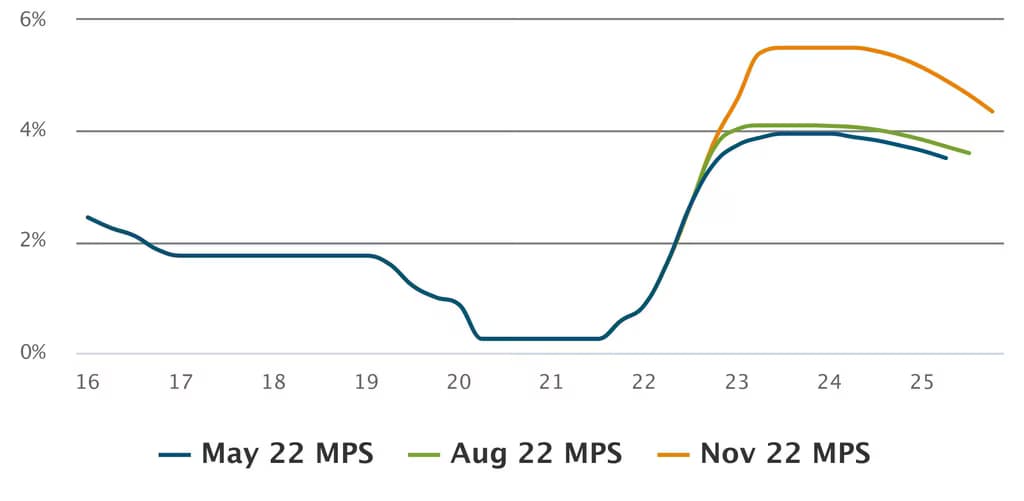
Peak OCR of 5.50% now expected in mid-2023
Inflation to peak higher at 7.5%pa
The key numbers...
- The Reserve Bank has delivered the largest increase to the official cash rate (OCR) in history, with a 75-basis point increase to 4.25%. The Bank has also sent a strong message that the OCR will need to rise considerably further to wrestle inflation under control.
- The Bank now expects to raise the OCR to a peak of 5.50% by mid-2023, with a further 75bp increase implied for February 2023. The Bank also now expects to need to cut interest rates in the second half of 2024, following a four-quarter (one-year) recession from mid-2023.
- Inflation is expected to rise to a new peak of 7.5%pa in the December 2022 and March 2023 quarters, with quarterly inflation of more than 1.0% expected until the end of 2023. Quarterly non-tradable inflation will persist above 1.0% until mid-2024.
- House prices are now expected to decline 18.9% from peak to trough, bottoming out in the first half of 2024, at levels still 17% above pre-pandemic.
- Private sector wage growth is set to peak at 9.1% in the December quarter, and then start to slow as the labour market weakens. The unemployment rate is set to rise to 3.6% in the first quarter of 2023 and peak at 5.7% at the start of 2025.
RBNZ revises OCR track higher still
Official Cash Rate, quarterly averages
...and our reaction
- Seriously high inflation demands a seriously intense response, and the Reserve Bank rose to the challenge in its final meeting of 2022 to lift the OCR by a massive 75 basis points (bp). Nevertheless, the Bank could and should have gone harder. It seriously considered a 100bp increase, in part as insurance before a three-month break, but opted not to – we think this was the wrong move.
- The Bank at the same time raised its forecast peak OCR to 5.5%, and included a further 75bp increase at the next review in February 2023. In our view, if the Bank knows it needs to go big again in early 2023, then it should have gotten on with a larger move now, arrived at its likely destination faster, and given itself more room to manoeuvre next year if necessary.
- With two back-to-back 75bp increases now expected (today’s increase, and a February increase), we find it hard to believe that the Bank can effectively stop lifting the OCR there, or that it will have enough evidence for an immediate halt to interest rate rises by the second quarter of 2023.
- Infometrics now expects a peak OCR of 5.75% by mid-2023, with a 75bp rise in February, a 50bp lift in April, and a 25bp increase in May. However, we believe that the balance of risks still lies to the upside, and a 6.0% OCR is easy to envisage. We can also contemplate a lower OCR peak if inflation, the labour market, and the economy all soften faster than expected, but we regard this outlook as unlikely.
- A deteriorating labour market should become more apparent in early 2023, with recessionary conditions setting in from mid-2023 as consumption falls. The time taken to get to this point reflects the fact that many households hold a large quantity of savings, and weaker spending and economic growth will not occur until job and income security deteriorate. Softer demand will force businesses to tighten their belts and limit their pricing behaviour.
- The Bank again highlighted the pressure that the government is still contributing to inflation, stating that “on balance, members viewed the risks to inflation pressure from fiscal policies as skewed to the upside given the ongoing real demand for services.” The government should more seriously heed the Bank’s warning and consider its spending priorities to help rein in inflation.
Latest updates
Premium

Monetary policy review
OCR up for first time in three years, as expected
Wed 8 Jul 2026
2.5% Official cash rate from 2.25% Inflation now expected by the Bank to peak at 3.9%pa
 Further rate rises likely but uncertainty about the timing
Premium
Monetary policy review
Split decision keeps OCR at 2.25% for now
Wed 27 May 2026
 2.25% Official cash rate unchangedCasting vote made by Governor with a 3-3 vote split among Committee membersRBNZ forecast OCR to reach 3% by end of 2026
Monetary policy review
Reserve Bank holds at 2.25%, but watches vigilantly
Wed 8 Apr 2026
2.25% Official cash rate unchangedBank places more emphasis on potential inflationary risks4.2% Annual inflation forecast to accelerate by June this yearMonetary policy review
OCR on hold, but set to lift slightly quicker
Wed 18 Feb 2026
2.25% Official cash rate (OCR) unchangedDec-26 qtr First OCR rise now expected a quarter earlier than last MPSSep or Oct Financial markets picking for the first increase