
Our take on the latest Monetary policy review (Wed 7 Aug 2019)



OCR slashed to 1.00%
RBNZ signals another possible cut by early 2020
Economic slowdown expected to become more pronounced
The key numbers...
- The Reserve Bank has moved swiftly to fire up business investment and consumer spending, making a decisive 50 basis point cut to spur greater reaction across the economy.
- However, this move also highlights the extent of the economy’s current slowdown and the risks of a further deterioration in growth over the next year.
- We believe the Reserve Bank is more hopeful than realistic about the scope for a pick-up in the domestic economy, with our forecasts showing that the government is struggling to get money out the door and businesses are unwilling to invest, even with cheaper credit on offer.
- Another cut in the official cash rate is likely before the end of 2019, despite the likelihood of a muted response from businesses and consumers to any pass-through of today’s cut into retail interest rates.
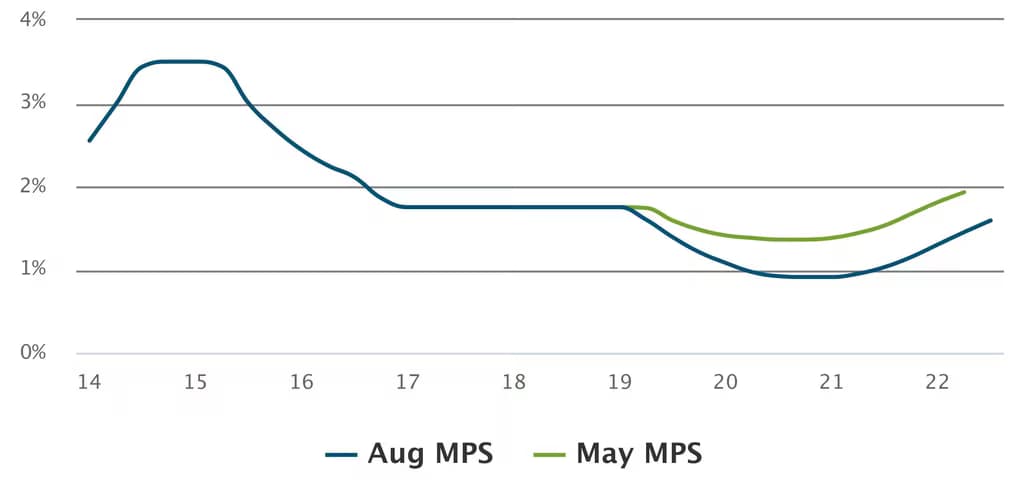
OCR forecast track
RBNZ forecast, quarterly averages
...and our reaction
- The Reserve Bank took an unexpected turn and cut the official cash rate (OCR) by 50 basis points to 1.00%, more than following through on its warning in May of the potential for another rate cut.
- Subdued inflation has given the Reserve Bank room to ease policy, with inflation’s forecast return to the 2% midpoint of the Bank’s target band delayed by a year, to the end of 2021.
- Global headwinds continue to drive growth expectations lower, with the Reserve Bank highlighting international uncertainty, lower trade demand, and an easing bias by other central banks as key factors in economic growth slowing to an estimated 2.0%pa in the June 2019 quarter.
- The Reserve Bank has signalled the potential for more monetary stimulus, with its OCR forecasts showing another cut of 25 basis points is possible by early 2020.
- The Bank still sees domestic activity as a positive contributor to future growth, with low interest rates, government spending, and construction activity highlighted as factors that will increase demand.
Latest updates
Premium

Monetary policy review
OCR up for first time in three years, as expected
Wed 8 Jul 2026
 2.5% Official cash rate from 2.25%Inflation now expected by the Bank to peak at 3.9%pa
 Further rate rises likely but uncertainty about the timing
Premium
Monetary policy review
Split decision keeps OCR at 2.25% for now
Wed 27 May 2026
 2.25% Official cash rate unchangedCasting vote made by Governor with a 3-3 vote split among Committee membersRBNZ forecast OCR to reach 3% by end of 2026
Monetary policy review
Reserve Bank holds at 2.25%, but watches vigilantly
Wed 8 Apr 2026
2.25% Official cash rate unchangedBank places more emphasis on potential inflationary risks4.2% Annual inflation forecast to accelerate by June this yearMonetary policy review
OCR on hold, but set to lift slightly quicker
Wed 18 Feb 2026
2.25% Official cash rate (OCR) unchangedDec-26 qtr First OCR rise now expected a quarter earlier than last MPS Sep or Oct Financial markets picking for the first increase