
Our take on the latest Monetary policy review (Wed 26 Jun 2019)



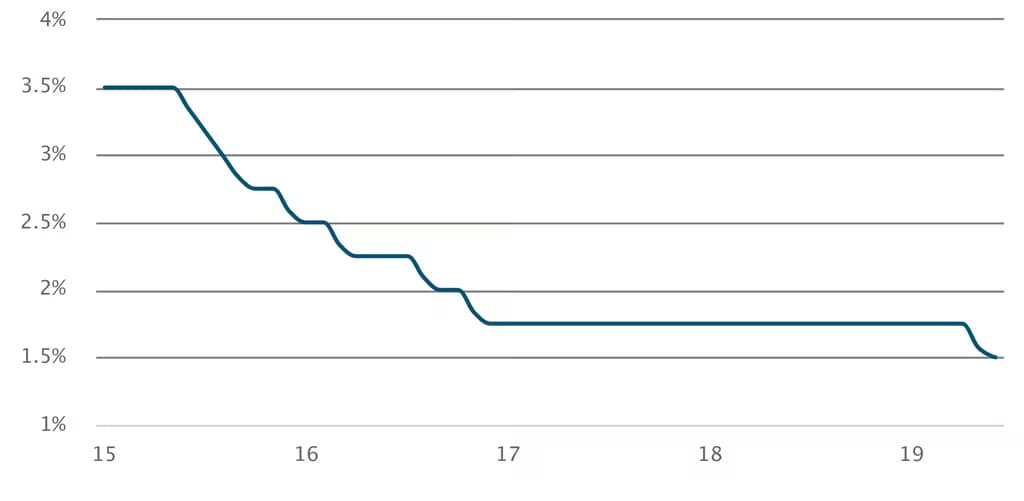
OCR remains unchanged at 1.50%
We expect another OCR cut in August
Reserve Bank highlights potential delays in fiscal stimulus
The key numbers...
- Although the Reserve Bank held the official cash rate (OCR) at 1.50% today, a lack of confidence in the economic outlook sends a clear signal that the Bank intends to cut the OCR in August 2019.
- We have previously noted that one 25-point cut was not going to make any real difference to the economy, and that if the economic outlook is as concerning as the Bank contends, a second cut would be needed in August.
- We believe that 1.25% will be the trough for the OCR in this cycle. Although much of the Bank’s statement was downbeat, it noted that inflation is expected to rise to 2%pa and employment is expected to remain near its maximum sustainable level, suggesting limited scope for further rate cuts without a further significant deterioration in the economic outlook.
- The Bank also noted “the impact on growth of any increase in government spending being delayed”, which reiterates our point that although Budget 2019 is ambitious, the ability for the government to get money out the door is of greatest risk.
Official Cash Rate
Source: Reserve Bank
...and our reaction
- The Reserve Bank held the OCR at 1.50%, but the clear signal from the Bank was that “more support from monetary policy was likely to be necessary” given concerns over a weaker global economic outlook and softer domestic activity indicators.
- The ongoing US-China trade war, Brexit uncertainty, and soft European growth are all contributing to a deteriorating global outlook. The fact that “a number of central banks are easing their monetary policy settings” also reinforced the Bank’s view that another rate cut is likely to be needed.
- Domestic risks appear mixed: the Bank highlighted that “softer house prices and subdued business sentiment continue to dampen domestic spending”, but also that it expects “low interest rates and increased government spending to support a lift in economic growth and employment.”
Latest updates
Premium

Monetary policy review
OCR up for first time in three years, as expected
Wed 8 Jul 2026
 2.5% Official cash rate from 2.25%
 Inflation now expected by the Bank to peak at 3.9%pa
 Further rate rises likely but uncertainty about the timing
Premium
Monetary policy review
Split decision keeps OCR at 2.25% for now
Wed 27 May 2026
2.25% Official cash rate unchangedCasting vote made by Governor with a 3-3 vote split among Committee membersRBNZ forecast OCR to reach 3% by end of 2026Monetary policy review
Reserve Bank holds at 2.25%, but watches vigilantly
Wed 8 Apr 2026
2.25% Official cash rate unchangedBank places more emphasis on potential inflationary risks4.2% Annual inflation forecast to accelerate by June this yearMonetary policy review
OCR on hold, but set to lift slightly quicker
Wed 18 Feb 2026
2.25% Official cash rate (OCR) unchangedDec-26 qtr First OCR rise now expected a quarter earlier than last MPS Sep or Oct Financial markets picking for the first increase