Economic and fiscal update
Fuel tax subsidy extension extremely dumb economic policy
1 Feb 2023

Our take on the latest Economic and fiscal update (Wed 1 Feb 2023)



Fuel tax, public transport, and RUC subsidies extended until June 2023
Total transport subsidies cost now over $2.1b
Likely that government will extend subsidies past June 2023
The key numbers...
- New Prime Minister Chris Hipkins has announced that the cheaper transport policies announced as part of last year’s Cost of Living support have been further extended, despite a previous announcement in December that they would be phased out by the end of March.
- The policy extension is expected to cost another $718m, on top of the roughly $1.4b already committed before the extension, taking the total policy cost to over $2.1b.
- The 25c/L reduction in Fuel Excise Duty (FED) charged on petrol has been extended until 30 June 2023, rather than being phased out in February and March 2023. Half-price public transport fares have also been extended until 30 June.
- The reduction in Road User Charges (RUCs), which lapsed on 31 January, will be reintroduced once fresh legislation is passed to enable the reduction, and the RUC reduction will also continue until 30 June.
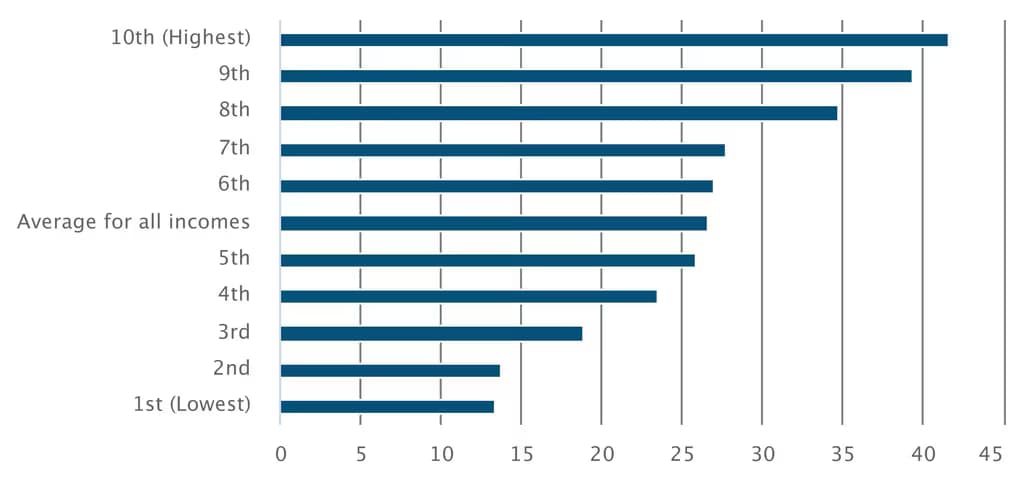
- Infometrics analysis shows that the highest-income decile of households will save around $42/month from the FED reduction, with the lowest-income decile only saving $14/month.
Fuel tax cut distribution favours highest earners
Estimated monthly fuel cost savings per household, by income decile
...and our reaction
- Further extending the reduction in FED is extremely dumb economic policy, as it provides three times as much support to the top income decile as the bottom income decile. However, it’s a politically popular move, given inflation remains high, at 7.2%pa, and 91-octane petrol prices would be about $2.75/L with the full excise duty reinstated.
- It’s hard to understand the complete reversal from the full-throated explanation for the removal of the subsidies when it was announced late last year. On 14 December 2022, the government said that “it is not sustainable to continue to subsidise the cost of petrol indefinitely for everyone”.
- The revival of the RUC reduction is important, even though the current reduction has now lapsed and new legislation is needed to reinstate the reduction again. Without the RUC reduction, transport costs would have risen further, putting more cost pressure on physical goods movements (including food costs).
- The latest extension is until the end of June 2023 – the end of the fiscal year. That allows time for money to be found in Budget 2023 to fund a further extension thereafter, with the Minister of Finance intimating as much: “This extension takes us to the end of the financial year. We have already indicated that the Budget will have a cost of living focus, and this extension covers the time until that comes into force,” Grant Robertson said.
- We expect there will be a further extension to these transport subsidies in the Budget, with it being highly unpalatable politically to increase fuel, public transport, and RUC costs just months away from an election.
- Extending the subsidies for FED and public transport fares will remove about 0.1 percentage points of inflation from the March quarter result and about 0.8 percentage points from the June quarter result. If the subsidies are not extended beyond June, then the September quarter inflation result will be commensurately higher. The extension of the road user charges subsidy will also delay flow-on effects of higher transport prices into inflation for other goods and services.
Latest updates
Premium

Economic and fiscal update
Budget 2026: Fiscal position set to improve
Thu 28 May 2026
 $3b Surplus a year earlier in 2030
 $10.8b Higher revenue over 2026-30, relative to HYEFU$100m pa Funding for councils to invest in infrastructure
Premium
Economic and fiscal update
OBEGALx return to surplus delayed yet again
Tue 16 Dec 2025
 Core Crown revenue down $6.3b, and expenses up $0.5bReturn to surplus now in 2029/30 (OBEGALx)80% of the increase in net Core Crown debt to fund capex
Economic and fiscal update
Budget 2025: The switch-it budget
Thu 22 May 2025
Core crown revenue down $9.8b, and expenses down $3.1bReturn to surplus in 2028/29Investment Boost tax incentive to drive investmentEconomic and fiscal update
Return to surplus pushed out another two years
Tue 17 Dec 2024
Slower productivity growth lowers GDP growth trackGovernment spending remains above 31% of GDPReturn to surplus in 2028/29 (OBEGALx)