
Our take on the latest Economic and fiscal update (Wed 15 Dec 2021)


Additional $12.8b in Budget allowance over three years
Net debt-to-GDP peaks lower still, at 40% in 2023
Inflation expected to peak at 5.6%pa
The key numbers...
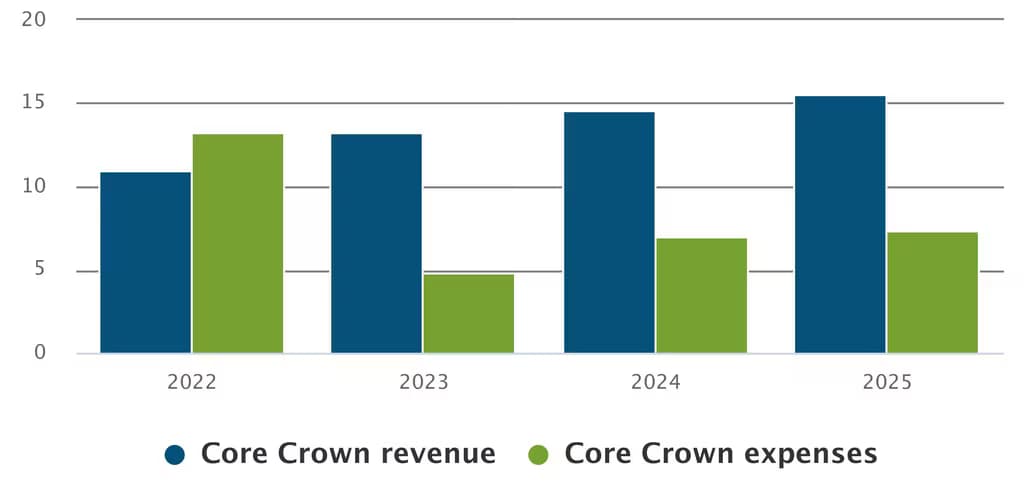
- Treasury’s Half Year Economic and Fiscal Update showed higher expectations for government spending and government revenue. Revenue is expected to be $54.5b higher over the 2022-25 period compared to Budget 2021, and government spending will be $32.4b higher. The government books are set to return to surplus in 2024, far earlier than first expected.
- The labour market is forecast to remain tight, with unemployment falling further to a low of 3.1% in early 2022, holding below 3.5% until the end of 2023, and staying below 4% until the end of 2025. Wage growth is expected to accelerate further and remain stronger throughout the forecast period, climbing above 4%pa and staying there.
- Net debt is now expected to peak at 40.1% of GDP in 2023, down from a forecast peak of 48% in the Budget. Part of this lower debt ratio is that nominal GDP will be higher due to inflation, but total government borrowing will also be $25.6b lower than previously expected by 2025.
- Treasury expects inflation to peak at 5.6%pa in early 2022, before easing to below 3%pa at the end of 2023.
Government to earn more and spend more
$b, difference between HYEFU 2021 and Budget 2021
...and our reaction
- The economy continues to show strength, with higher GDP and employment bolstering government coffers and allowing for a boost to future spending. The higher spending is partly driven by the health reforms and longer-term investments, as the government looks to accelerate its ambitious work programme.
- Today’s projections show considerably higher spending levels going forward. Some of that spending is likely to be used to pay off health debt, but with $32b in additional spending by 2025, on top of previous spending expectations, government spending is running hot. Questions remain about the prudency of further spending increases given that the government’s starting fiscal position is considerably worse than would have been envisaged before COVID-19 struck.
- Higher levels of government spending, and increased expectations for wage inflation point towards the risk that inflation could remain more persistent. There are already difficulties finding talent and resources, and more government activity could raise prices further and divert resources from the private sector but achieve little in terms of genuinely boosting economic activity.
- The government is still well positioned to respond to further economic challenges, with $4.3b still available in the COVID-19 Response and Recovery Fund. A better economic starting point and lower debt gives the government more spending potential and allows for greater flexibility to respond to future challenges.
Latest updates
Premium

Economic and fiscal update
Budget 2026: Fiscal position set to improve
Thu 28 May 2026
 $3b Surplus a year earlier in 2030$10.8b Higher revenue over 2026-30, relative to HYEFU
 $100m pa Funding for councils to invest in infrastructure
Premium
Economic and fiscal update
OBEGALx return to surplus delayed yet again
Tue 16 Dec 2025
Core Crown revenue down $6.3b, and expenses up $0.5bReturn to surplus now in 2029/30 (OBEGALx)80% of the increase in net Core Crown debt to fund capexEconomic and fiscal update
Budget 2025: The switch-it budget
Thu 22 May 2025
Core crown revenue down $9.8b, and expenses down $3.1b Return to surplus in 2028/29Investment Boost tax incentive to drive investment
Economic and fiscal update
Return to surplus pushed out another two years
Tue 17 Dec 2024
Slower productivity growth lowers GDP growth trackGovernment spending remains above 31% of GDPReturn to surplus in 2028/29 (OBEGALx)