
Our take on the latest Economic and fiscal update (Wed 11 Dec 2019)


Infrastructure investment of $8b
$943m deficit in 2020 expected
Room for more investment, if government wanted
The key numbers...
- The government has announced an additional $12b in infrastructure investment, with $8b for specific projects, and $4b added to the government’s capital investment pool over the next few budgets.
- The lion’s share of new investment is for transport projects, with $6.8b for “roads and rail”. Other areas of new investment include education ($400m, already announced), regional investment ($300m), health asset maintenance ($300m), and public estate decarbonisation ($200m).
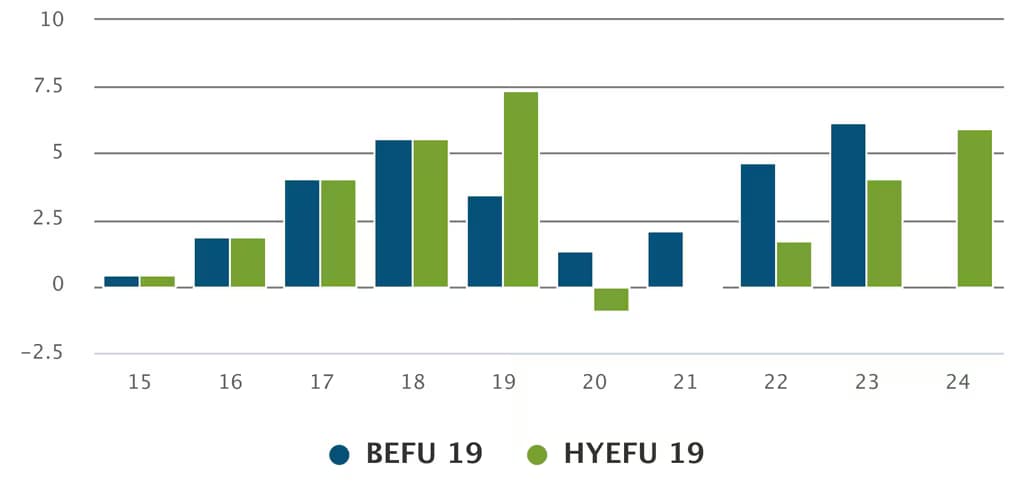
- Net-debt-to-GDP is expected to peak at only 21.5% in 2022, after a set of lower, but still strong, budget surpluses. A deficit of $943m is expected in 2020, with surpluses rising to $5.9b in 2024.
- Treasury has substantially revised down its outlook for economic growth, with GDP expected to increase just 2.2% over the June 2020 year, compared to a forecast of 3.0% in last May’s budget.
Government deficit forecast for 2020
OBEGAL, $b, June years
...and our reaction
- The government has announced a major infrastructure package, but aside from broad spending areas, the details of specific projects will only be announced in 2020. With a large proportion of additional spending earmarked for transport, roading projects will be key to success if the government wants construction to get underway swiftly.
- The focus on transport (including roading), after a conscious decision to turn away from roading in previous years, is useful in the sense that it provides more certainty around projects and activity, but also sends a confused message over the government’s transport strategy.
- Some regional funding is expected to provide more investment for local government projects, including infrastructure projects that don’t meet Provincial Growth Fund requirements.
- Although this new investment is large, the government could have made a much larger investment announcement. Its debt-to-GDP ratio remains low by international standards, interest rates are at historic lows, and rising budget surpluses remain in place.
- The lack of clarity so far on the specific projects funded, alongside a heavy emphasis on transport and the change in spending focus, means that spending will still take time to roll out, and our outlook remains for government spending activity to lag expectations.
Latest updates
Premium

Economic and fiscal update
Budget 2026: Fiscal position set to improve
Thu 28 May 2026
 $3b Surplus a year earlier in 2030$10.8b Higher revenue over 2026-30, relative to HYEFU
 $100m pa Funding for councils to invest in infrastructure
Premium
Economic and fiscal update
OBEGALx return to surplus delayed yet again
Tue 16 Dec 2025
 Core Crown revenue down $6.3b, and expenses up $0.5bReturn to surplus now in 2029/30 (OBEGALx)80% of the increase in net Core Crown debt to fund capex
Economic and fiscal update
Budget 2025: The switch-it budget
Thu 22 May 2025
Core crown revenue down $9.8b, and expenses down $3.1b Return to surplus in 2028/29Investment Boost tax incentive to drive investment
Economic and fiscal update
Return to surplus pushed out another two years
Tue 17 Dec 2024
Slower productivity growth lowers GDP growth trackGovernment spending remains above 31% of GDPReturn to surplus in 2028/29 (OBEGALx)