
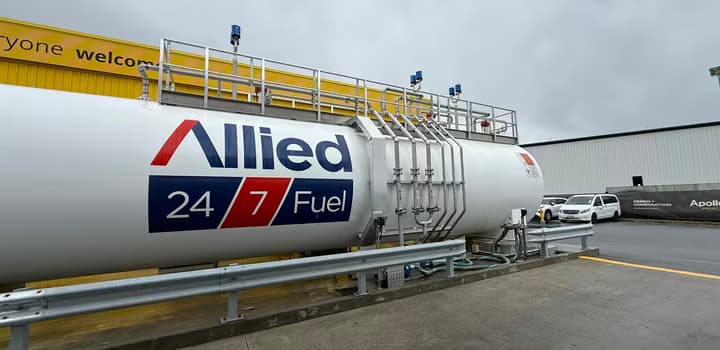
Diesel has emerged as the critical pressure point in New Zealand’s current fuel shock, posing a far greater risk to economic activity than other refined products due to its dominant role across transport, agriculture, and heavy industry. With diesel accounting for just over half of total oil consumption and underpinning the movement of goods and operation of key productive sectors, both rising prices and tightening supply are set to transmit quickly and broadly through the economy.
This analysis examines where exposure to diesel is most concentrated, how higher fuel prices and transport costs will cascade across industries, and why the resulting pressures are likely to evolve into a more widespread constraint on growth and adversely affect cost structures and business resilience.
Diesel the key risk for the economy
Diesel is the key risk for economic activity – much more than petrol or avgas. New Zealand’s minimum stockholding obligations were lowest for diesel, and prices for diesel have already blown out more than petrol. Both price and supply concerns persist for diesel, given its importance to the economy, and the volume of diesel use compared to other types.
MBIE data shows total oil product consumption of 47.2m barrels of product during 2025. Of that total, just over half (51%), or 24.2m barrels, was diesel. Petrol was second, with 18.2m barrels, representing 39% of the total.
The transport sector is the key user of diesel. In 2025, domestic transport used 77% of total diesel consumed in New Zealand. Other use is considerably smaller – agriculture is the second-largest user, with 9.5% of total diesel use in 2025.
Industry used 8.0% of diesel, followed by commercial and public services at 3.5%, then finally residential use at 2.2%.
Diesel supply issues will hit transport, primary sector most
Not only is diesel use concentrated in the transport sector, but it is a large component of overall costs in the transport sector. Alongside possible supply constraints, higher diesel prices are set to push up transport costs across the board, with fuel adjustment factors being implemented quickly as everyone struggles to keep on top of current price increases.
Infometrics analysis suggests that, unsurprisingly, transport is most exposed to higher fuel prices – and risks to supply. We estimate that 19-26% of non-wage operating costs for transport operations, across road, rail, sea, and air, are oil-based fuel costs. Already, Air New Zealand and Jetstar have cut a number of flights across the domestic and internation networks, due to the spike in fuel prices.
The fishing and aquaculture industry is the most exposed, at 26% of non-wage operating costs, given the importance of diesel to power fishing vessels.
Other sectors are also exposed. Nearly 11% of primary sector support services and 5.5% of horticulture non-wage operating costs are for oil-based fuels, with diesel used across farm machinery. Mining equipment, heavy and civil construction, and non-metallic mineral manufacturing (concrete and aggregates) also have high exposure.
The primary sector is facing a potential double-hit, with fertiliser prices globally surging after the conflict began in the Middle East, given the region supplies various inputs into the fertiliser sector. Some parts of the primary sector enter this period of uncertainty with more of a buffer, with higher commodity prices across dairy and meats. But horticulture and arable farming operators don’t have as much of a buffer, and they are facing higher costs immediately. The 25% spike in on-farm costs during 2021-23, as fertiliser, fuel, and finance costs rose sharply, will still be fresh in the minds of farmers.
Forestry, and wholesale and retail trade, most exposed to higher transport costs
We expect cost pass-through is most evident in wholesale and retail trade. Higher freight costs, alongside rising supplier prices, are pushing up the cost of producing the goods themselves and getting goods onto shelves.
Various manufacturing sub-industries are also relatively exposed to higher oil-based fuels and transport costs, adding pressure on top of existing concerns. Direct energy and transport costs are rising, but so too are imported input prices as global supply chains adjust. Higher plastics prices will also make packaging costs rise.
Construction remains particularly vulnerable. The sector is already grappling with subdued demand for some sub-industries, and tight project economics for others, especially civil works. Higher fuel costs add another layer, lifting the price of transporting materials and contributing to increases in energy-intensive inputs such as cement and steel. Concerns not only around pricing pressures, but actual securing of supply of diesel, are high. Any fuel disruptions, no matter how temporary, could undermine momentum in civil construction activity, adding cost and time delays to already large, expensive, and long-term projects.
We have also started to hear about higher prices for plastic-based packaging and plastic pipe prices.
RBNZ to look through although bank funding rates are up already
Last week Reserve Bank Governor Dr Anna Breman gave a speech outlining some of the Bank’s thinking on the current oil shock, and laid out the Reserve Bank’s approach to the shock, ahead of the next Monetary Policy Review in early April. Essentially, the Reserve Bank is sticking to the usual supply shock playbook, where the Bank will tend to “look through” short-term price, temporary price spikes where they are “unlikely to have an impact on medium term inflation.” In other words, just because we expect headline inflation to head to 4%+ in the near-term, doesn’t in and of itself require the official cash rate to rise. Higher fuel prices aren’t expected to continue to happen every single day for the next five years, and more money going to pay for more expensive fuel should dampen spending, and then pricing pressures, in other parts of the economy.
The Bank would look to tighten monetary policy if those short term pricing pressures start to broaden, such as if businesses started to raise prices across the board in response to concerns that further oil price shocks might appear and those businesses needed to build up a stronger buffer.
That hasn’t stopped wholesale and retail interest rates increasing in the last couple of weeks. Swap rates have increased over 70 basis points (0.70%) between 2 March and 23 March, which has increased borrowing costs for banks, leading to retail mortgage rate increases. Although we’re still not expecting an official cash rate increase any time soon, higher bond and swap rates are set to pushing lending costs up regardless.
The pressure is mounting
The combination of constrained diesel availability and elevated fuel prices represents a significant headwind for the New Zealand economy, with the most acute impacts set to fall on transport, the primary sector, and construction. These pressures will flow through supply chains, lifting costs for businesses and consumers alike, while also testing the operational resilience of fuel-dependent industries. Although the Reserve Bank is likely to look through the immediate inflationary spike, rising funding costs and widespread cost pass-through signal broader economic tightening already underway.