
Our take on the latest Major event update (Tue 24 Jun 2025)



Oil prices spiked after Israeli and US airstrikes
Brent crude oil prices have since fallen back to around US$70/bl
Oil price volatility could continue depending on further Iranian response
The key numbers...
- Oil prices have been volatile in the last two weeks, following Israeli strikes on Iran on 13 June as part of Operation Rising Lion, then by US airstrikes on Iranian nuclear facilities as part of Operation Midnight Hammer.
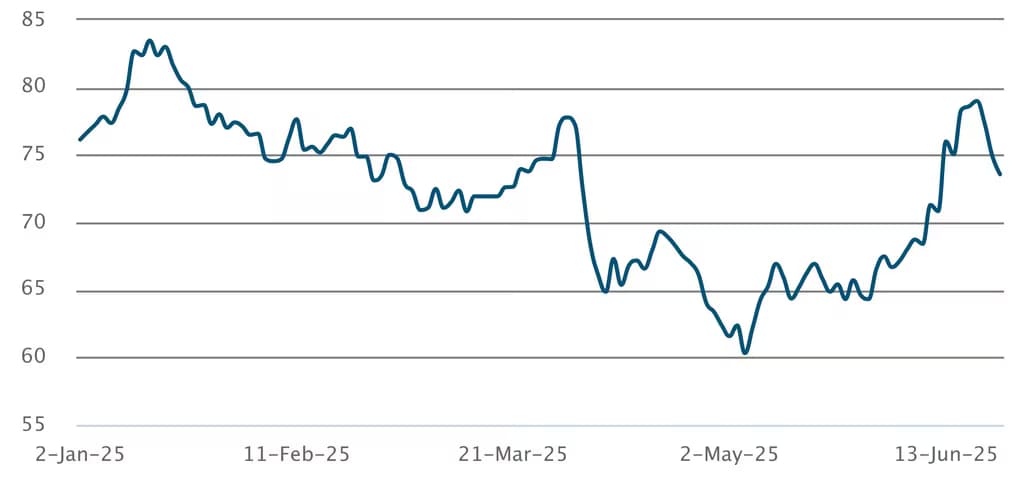
- International Brent crude oil prices spiked around 7% towards the end of last week (to 20 June) following the initial Israeli attack and retaliation from Iran. Following US strikes over the weekend, oil prices early on Monday (NZT) jumped higher to around US$80/bl, only to give up most of those gains throughout the day.
- Oil prices plunged around 8% (as of 8am NZT Tuesday 24 June) to sit near US$70/bl, close to price levels seen before Israel’s attack in mid-June.
- Markets had been waiting for Iran’s response to US airstrikes, with fears over access to the Strait of Hormuz leading oil prices higher. For now, retaliatory Iranian strikes this morning on US bases in the Middle East appear to be a limited and proportional response, with no direct targeting of shipping routes, oil facilities, or tankers.
- Although the Iranian Parliament has authorised the closure of the Strait, the final decision on closure rests with Iran's Supreme National Security Council.
Oil prices rise, then fall back, amid Middle East conflict
Europe Brent Spot Price FOB, US$/bl - EIA data to 16 June, implied Brent futures thereafter
...and our reaction
- Oil prices have eased following Iran’s retaliatory attacks on US bases in the Middle East, with markets convinced that Iran’s response shouldn’t directly impact the ongoing supply of oil.
- Oil prices usually surge higher during periods of Middle Eastern conflict, with worries about the supply of oil from the area, a key oil-producing region. Around 20% of the world’s oil moves through the narrow Strait of Hormuz between Iran and the UAE, and threats over to access the Strait, or to shipping, can have major implications on oil prices and shipping rates.
- Earlier expectations of escalating conflict in the Middle East had caused oil prices to rise as concerns over oil access and costs rose. However, the fact that oil assets and Strait access are both so far untouched suggests limited supply concerns – for now.
- The Middle East remains volatile, and oil prices would soar if the Strait of Hormuz was to shut, of if shipping in the region was attacked. Expectations for prices range from US$80-$110/bl if that scenario eventuates. Oil prices would need to rise by around 17% from current levels to see New Zealand petrol prices reach $3/L.
- Although there are some indications that pump prices have been rising recently in response to last week’s oil price jump, any further changes should be limited by the fact that oil prices have since pulled back. However, ongoing volatility may see prices inch higher to deal with companies hedging bets around current risks.
- Market reaction has been more muted than after earlier Middle East conflicts, and after scores of other major events this year that could influence economic outcomes. With such volatility and uncertainty globally, reaction seems to be more focused on realised outcomes, rather than just speculation and expectations of what will come next.
Latest updates
Premium

Major event update
Fuel rationing plan simplified and only for the most severe circumstances
Mon 11 May 2026
 Fuel rationing only to occur at Phase 4Prioritised access for Critical users and Food & FreightFuel supplies remain reasonable at present
Premium
Major event update
NZ-India FTA a solid deal amid global free trade retreat
Tue 23 Dec 2025
Indian tariffs reduced across 95% of NZ exportsNZ exports of sheep meat, forestry, and fruit appear to be key winnersNearly 3,000 temporary work and working holiday visas per year available to Indian nationalsMajor event update
Tariffs a limiting factor for economy
Fri 4 Apr 2025
10% tariff on $9b of NZ exports to the USKey NZ export countries have higher tariffsUS growth set to be 0.9ppts lower in 2025, global growth 0.17ppts lower