Labour market statistics
Unemployment rate at its highest in nearly four years
6 Nov 2024

Our take on the latest Labour market statistics (Wed 6 Nov 2024)



Unemployment rate up to 4.8%
Private sector labour cost index slowed to 3.3%pa
Employment down 0.5% from June 2024
The key numbers...
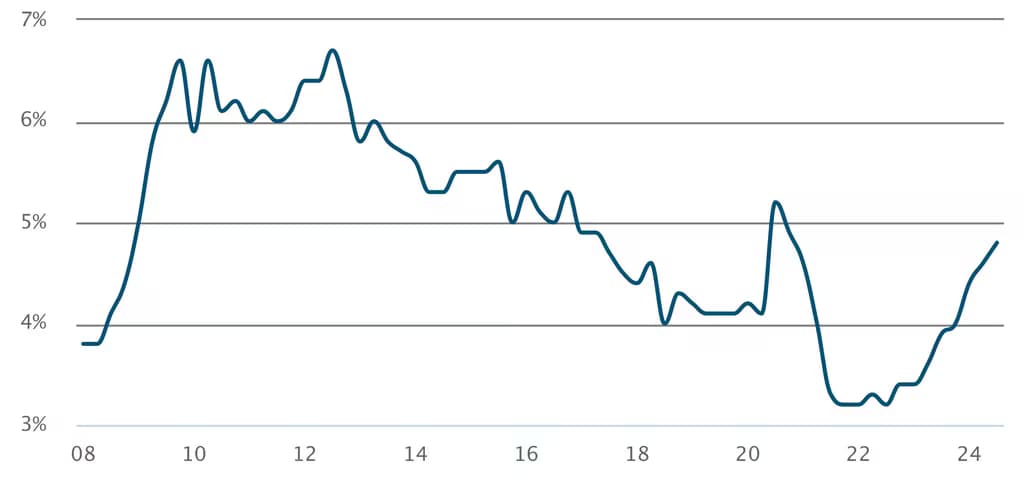
- The unemployment rate rose to 4.8% in the September 2024 quarter from 4.6% (seasonally adjusted) in June. The lift was less than analysts had anticipated (5.0%), but the rate was still at its highest level since December 2020.
- Growth in the labour cost index moderated to 3.8%pa in September 2024, down from 4.3% in the previous quarter to its slowest rate in two years. Private sector labour cost growth continued to slow, down from 3.6%pa in June to 3.3%, the slowest rate since March 2022. Public sector wages continue to grow faster than private sector, up 5.6% in the year to September, although this result was down from the 6.9%pa in June (all figures seasonally adjusted).
- Employment fell 0.5% between June and September, and the 0.4%pa drop from June 2023 was the first annual decline since 2012. The number of individuals employed fell 15,000 from June, while the number of unemployed rose just 5,000 in the September quarter. The difference of around 10,000 could reflect people who are discouraged from work and exited the labour force to study or moved overseas to find a job, limiting the rise in the unemployment rate to below analysts’ expectations (all figures seasonally adjusted).
- The labour force participation rate fell from 71.7% to 71.2%, the lowest rate since June 2022. Youth (aged 15-19) look to be discouraged by current conditions, with the youth participation rate dropping to 48.7% from 50.6% in June, the lowest rate since September 2021. However, participation across all other age groups has been relatively stable.
Unemployment pushing towards 5.0%
Unemployment rate, seasonally adjusted
...and our reaction
- The drop in the labour force participation rate limited the unemployment rate from rising as much as expected, with employment numbers showing the labour market is still weakening. Slowing labour cost growth supports this trend, with the lack of job opportunities driving wage growth down as competition for roles continues to rise.
- Public sector labour costs rose 0.9% in September from June 2024, the slowest quarterly rise since June 2023. The rise was largely driven by a jump in the central government administration, defence, and public safety industry group which rose 2.0%, reflecting the police collective pay agreement implemented.
- The unemployment rate was 0.2 percentage points below what the Reserve Bank picked in its August MPS forecasts (5.0%). However, the slowdown in private sector wage growth to 3.3%pa was more than had been forecast by the Reserve Bank, which expected growth of 3.5%pa. Public sector growth rates are taking longer to slow, but this trend will be of less concern to the Bank, because the public sector figures continue to be influenced by one-off pay agreements and settlements.
- Today’s data probably puts to bed the chance of a 75 basis point cut to the official cash rate (OCR) later this month. We still expect a 50 basis point cut as economic data has continued to show real weakness, especially with inflation coming close to the 2%pa mid-point of the Reserve Bank’s target band.
Latest updates
Premium

Labour market statistics
Unemployment jumps higher than expected
Wed 5 Aug 2026
Quarterly
5.6% Unemployment rate in the June 2026 quarter (s.a.)70.7% Participation rate the highest in over a year0.5% Employment growth in June from March (s.a.)Premium
Labour market statistics
More people, more working, more not participating
Wed 6 May 2026
Quarterly
 5.3% Unemployment rate eased slightly in the March 2026 quarter70.4% Participation rate fell slightly0.2% Employment rose in March from December (s.a.)
Labour market statistics
Higher participation drives unemployment increase
Wed 4 Feb 2026
Quarterly
5.4% Unemployment rate December 2025 quarter (sa)70.5% Participation rate December 2025 quarter (sa)2.0%pa Labour Cost Index Year to December 2025Labour market statistics
Unemployment rate rises to 5.3%
Wed 5 Nov 2025
Quarterly
Unemployment rate edges up to 5.3%Youth NEET rate rises to 13.2% (annual average)Labour cost growth slows to 2.1%pa