Labour market statistics
More labour market slack sees some easing in wage pressures
1 May 2024

Our take on the latest Labour market statistics (Wed 1 May 2024)



Private sector wage growth slows to 3.8%pa
Unemployment rate up to 4.3%
Underutilisation rate up at 11.2%
The key numbers...
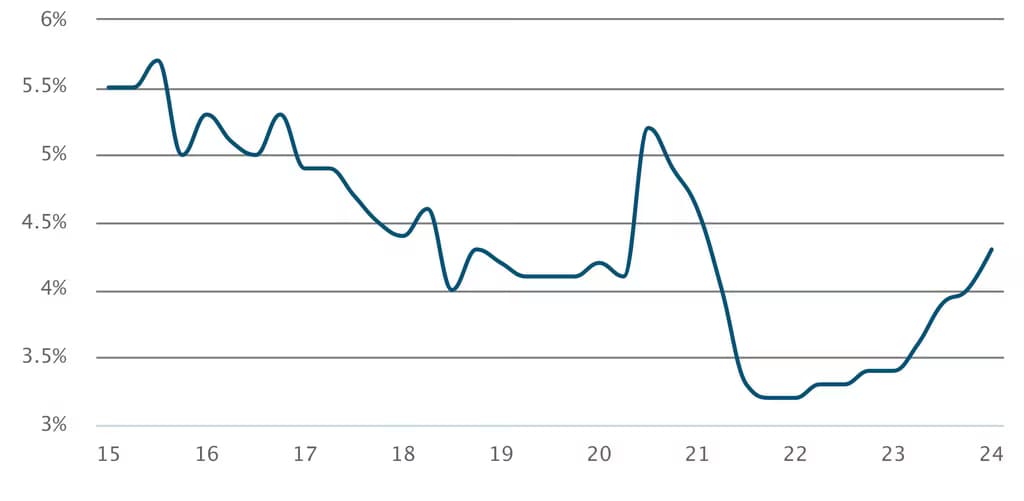
- The unemployment rate rose from 4.0% to 4.3% (seasonally adjusted) in the March 2024 quarter, lifting more than anticipated to reach its highest level in three years.
- The underutilisation rate lifted from 10.7% to 11.2%, and it has not been higher since March 2021. Over the last year, here has been a big lift of 27%in the number of underemployed people actively seeking additional hours, up by 75,000 people to 355,000.
- Youth unemployment (15-24-year-olds) contributed over half the move in unemployment over the past year, with young people not in employment, education, or training increasing from 11.2% to 12.1%.
- Growth in the labour force outpaced employment growth for sixth consecutive quarter with employment falling 0.2% as the labour force grew 0.1%. The working age population continued to grow (0.61%) with high levels of net migration still prevalent, but easing slightly its lowest level since December 2022.
- The labour cost index was up by 4.1%pa in March 2024, with the easing from 4.3%pa in the previous quarter driven by slower growth in private sector wages (with growth down from 4.0% in December 2023 to 3.8%). Private sector wage growth remained strong at 5.6%pa.
Unemployment rate on the rise
Seasonally Adjusted Unemployment rate, % of labour force
...and our reaction
- Today’s data showed an easing in the labour market in early 2024, by more than analysts had been anticipating.
- Underutilisation increases indicate there is a lack of additional hours for part-time workers who are willing and available to work more. The desire for additional hours is a sign of cost-of-living increases hitting household budgets, with workers willing to pick up more hours to put food on the table.
- The Reserve Bank will look for more easing in labour cost pressures in 2024 to give confidence that wage growth will not further push up operating costs, leading to more persistent inflation as some businesses pass these costs on to consumers. The early signs are positive with private sector growth easing to 3.8%pa, continuing the downward trend since the peak of 4.5% in March 2023.
- Public sector labour cost growth is likely to ease by the end of this year, as Central government reigns in expenditure and staff cuts come into effect later in 2024.
- We continue to expect the unemployment rate to push up to 5.0% by the second half of 2024, facilitating cuts to the official cash rate from late this year or early 2025.
Latest updates
Premium

Labour market statistics
Unemployment jumps higher than expected
Wed 5 Aug 2026
Quarterly
5.6% Unemployment rate in the June 2026 quarter (s.a.)70.7% Participation rate the highest in over a year0.5% Employment growth in June from March (s.a.)Premium
Labour market statistics
More people, more working, more not participating
Wed 6 May 2026
Quarterly
5.3% Unemployment rate eased slightly in the March 2026 quarter 70.4% Participation rate fell slightly0.2% Employment rose in March from December (s.a.)
Labour market statistics
Higher participation drives unemployment increase
Wed 4 Feb 2026
Quarterly
5.4% Unemployment rate December 2025 quarter (sa)70.5% Participation rate December 2025 quarter (sa)2.0%pa Labour Cost Index Year to December 2025Labour market statistics
Unemployment rate rises to 5.3%
Wed 5 Nov 2025
Quarterly
Unemployment rate edges up to 5.3%Youth NEET rate rises to 13.2% (annual average)Labour cost growth slows to 2.1%pa