Labour market statistics
Labour market moves from extremely tight, to just very tight
2 Aug 2023

Our take on the latest Labour market statistics (Wed 2 Aug 2023)


Unemployment rate up to 3.6%
Labour Cost Index up 4.3%pa
Participation and employment rates push to further record highs
The key numbers...
- The unemployment rate rose to 3.6% (from 3.4% previously) as more people looked for work. The underutilisation rate rose to 9.8%, the highest rate since June 2021, with the largest increase in underutilisation coming from the number of underemployed – who are working but want more hours.
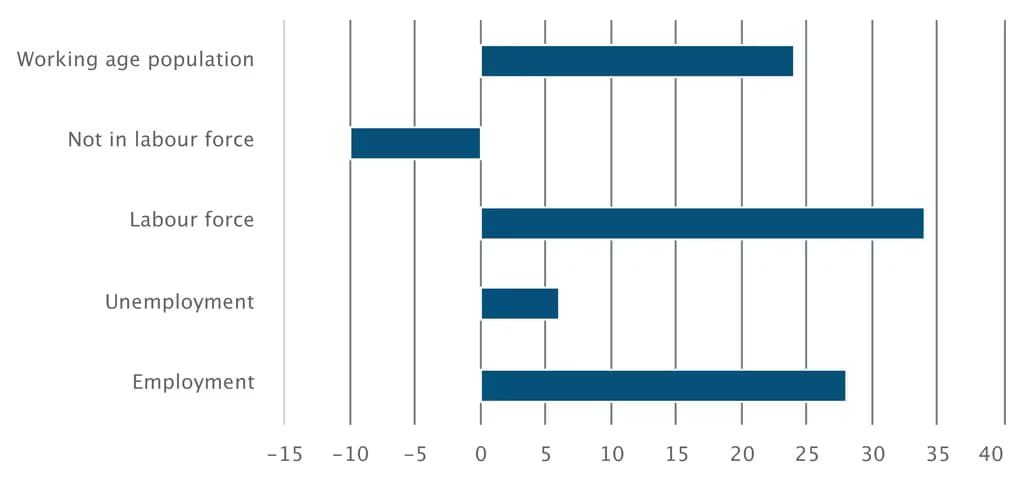
- In the June 2023 quarter there were 25,000 additional people in the working age population, and a 10,000-person reduction in the size of the ‘not in labour force’ group. Of this nearly 35,000 group, 28,000 found a job, and 6,000 weren’t able to find work and are counted as unemployed.
- The 28,000-job increase in employment equated to a 1.0% increase from March (seasonally adjusted), as the employment rate rose to 69.8% and the labour force participation rate rose to 72.4% - both further new record highs.
- The labour cost index (LCI) rose 4.3%pa, the same as the prior quarter, but growth in the unadjusted LCI accelerated to 5.9%pa. In the June 2023 quarter, the proportion of salary and wage movements greater than 5% reached a record high of 40%, but 35% of roles in the economy had no change in pay.
- The large fall in the ‘not in labour force’ group was driven by a decline in the number of people out of the labour force because they were caring for a child, particularly females.
More people in the labour force, but not everyone got a job
Quarterly change in labour market components, 000s, seasonally adjusted
...and our reaction
- The labour market is going from extremely tight to very tight, with more capacity becoming available in the economy. However, wage pressures remain elevated and haven’t shown any signs of slowing down so far – in fact, they’re still accelerating.
- The rise in the unemployment rate from 3.4% to 3.6% resulted from a larger increase in people looking for work than the increase in jobs available. The rise wasn’t due to a large loss of jobs, as employment rose by 28,000 people.
- The large fall in the ‘not in labour force’ group highlights that as cost of living pressures bite harder, more people are looking to get work to make ends meet. The data suggests that mothers are rejoining the workforce, given both high costs and higher pay on offer.
- Wage pressures remaining high will continue to make the Reserve Bank uncomfortable, particularly as some of the underlying wage measures are still accelerating and risks wage inflation remaining higher for longer.
- Overall, the rise in the unemployment rate reflects less tightness in the labour market, a trend that over time is expected to reduce the pressure on wages, but so far, the emerging slackness in the labour market is being driven by more people looking for work than there are jobs available, and not from people being fired from their current jobs. Wage pressures will remain acute until competition for jobs comes down further.
Latest updates
Premium

Labour market statistics
Unemployment jumps higher than expected
Wed 5 Aug 2026
Quarterly
5.6% Unemployment rate in the June 2026 quarter (s.a.)70.7% Participation rate the highest in over a year0.5% Employment growth in June from March (s.a.)Premium
Labour market statistics
More people, more working, more not participating
Wed 6 May 2026
Quarterly
 5.3% Unemployment rate eased slightly in the March 2026 quarter
 70.4% Participation rate fell slightly0.2% Employment rose in March from December (s.a.)
Labour market statistics
Higher participation drives unemployment increase
Wed 4 Feb 2026
Quarterly
5.4% Unemployment rate December 2025 quarter (sa)70.5% Participation rate December 2025 quarter (sa)2.0%pa Labour Cost Index Year to December 2025Labour market statistics
Unemployment rate rises to 5.3%
Wed 5 Nov 2025
Quarterly
Unemployment rate edges up to 5.3%Youth NEET rate rises to 13.2% (annual average)Labour cost growth slows to 2.1%pa