
Our take on the latest Labour market statistics (Wed 5 Aug 2020)



Unemployment rate FALLS to 4.0%
Underutilisation rate rose to 12%
Total hours worked fell 10%pa
The key numbers...
- Implausibly, the seasonally adjusted unemployment rate fell to 4.0%pa in the June quarter, defying market expectations of a rise to 5.6%.
- However, a wider assessment of the available data paints a more realistic picture of the labour market, with a significant hit for workers and businesses apparent.
- Over the June quarter, Stats NZ estimates that employment fell by 11,000 people, and unemployment fell by 6,000 – with all these people moving into the “Not in Labour Force” category.
- In total, 1.22m Kiwis are now classified as “Not in Labour Force” – a 3.1% rise, and the second-largest shift into this group since records began.
- The underutilisation rate rose from 10.4% to 12.0% - with 346,000 New Zealanders having the capacity to work or work more.
- Total hours worked fell 10.3% from the March quarter due to lockdown, the largest declines in working time on record.
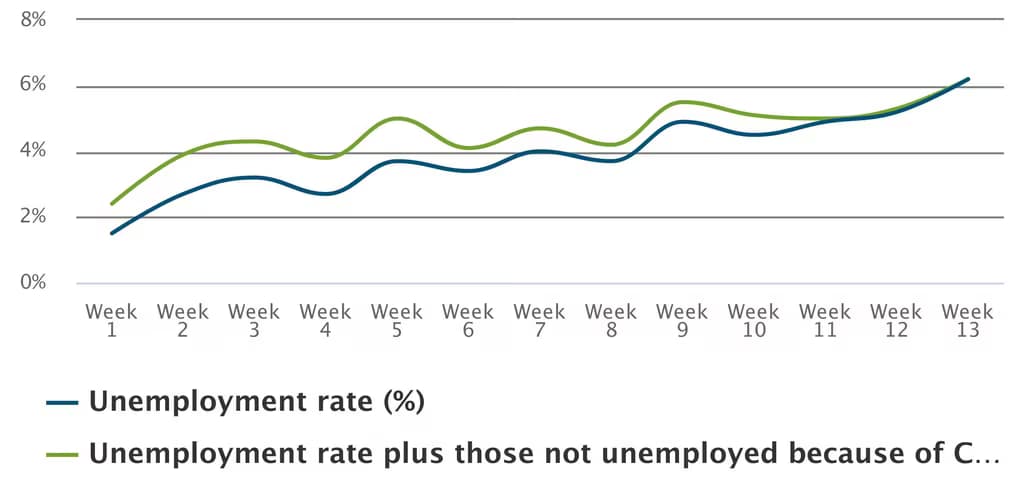
Unemployment rate
By survey reference week
...and our reaction
- To say today’s numbers were an unexpected shock would be an understatement – we’re surprised at just how little of COVID-19’s disruption to the labour market has shown through in the official numbers.
- Substantially lower hours worked highlights that economic activity was at a significantly constrained level in the June quarter.
- Overall, the reason for the surprising result is largely driven by definitional, structural, and timing issues. Although the unemployment rate has fallen, the full picture shows a significantly weaker labour market.
- Over the course of the survey (which is an average over the quarter), unemployment did rise, with Stats NZ reporting its weekly figures pointed towards the unemployment rate rising to 6.2% by the final week of June. But many of those people surveyed earlier in the quarter didn’t, at that time, meet the definition of “unemployed”.
- At Alert Levels 4 and 3, most people who lost jobs were unable to be actively looking from work. In most circumstances, only looking at job ads online isn’t enough to be “actively seeking” work, and so these people weren’t classed as officially unemployed.
- The rise in the “Not in Labour Force” group shows there are a considerable number of Kiwis who have lost work, or who were looking for work, who now aren’t doing either activity. Instead, Kiwis either weren’t able to look for work (due to restrictions) or were discouraged from looking for work because they perceive it to be too tough to find a job under present conditions.
- Even allowing for these issues, today’s data is hard to reconcile with other labour market information we have such as Jobseeker Support beneficiaries. Noting the definitional difference from unemployment, Jobseeker Support benefit numbers and COVID-19 Income Relief Payment recipients rose by 49,000 over the June quarter, and are currently up 67,000 since 20 March. These figures indicate further worsening in labour market data is destined to appear in the September quarter.
Latest updates
Premium

Labour market statistics
Unemployment jumps higher than expected
Wed 5 Aug 2026
Quarterly
 5.6% Unemployment rate in the June 2026 quarter (s.a.)70.7% Participation rate the highest in over a year0.5% Employment growth in June from March (s.a.)
Premium
Labour market statistics
More people, more working, more not participating
Wed 6 May 2026
Quarterly
5.3% Unemployment rate eased slightly in the March 2026 quarter 70.4% Participation rate fell slightly0.2% Employment rose in March from December (s.a.)
Labour market statistics
Higher participation drives unemployment increase
Wed 4 Feb 2026
Quarterly
5.4% Unemployment rate December 2025 quarter (sa)70.5% Participation rate December 2025 quarter (sa)2.0%pa Labour Cost Index Year to December 2025Labour market statistics
Unemployment rate rises to 5.3%
Wed 5 Nov 2025
Quarterly
Unemployment rate edges up to 5.3%Youth NEET rate rises to 13.2% (annual average)Labour cost growth slows to 2.1%pa