
Our take on the latest Monetary policy review (Mon 23 Mar 2020)


RBNZ to buy $30b of government bonds
Aim is to bring down longer-term interest rates
Government to underwrite lending to affected businesses and mortgage holders
The key numbers...
- The Reserve Bank's Monetary Policy Committee has authorised the Bank to buy up to $30b in government bonds over the next year.
- The Committee determined the economy needed additional support given rapidly deteriorating economic conditions.
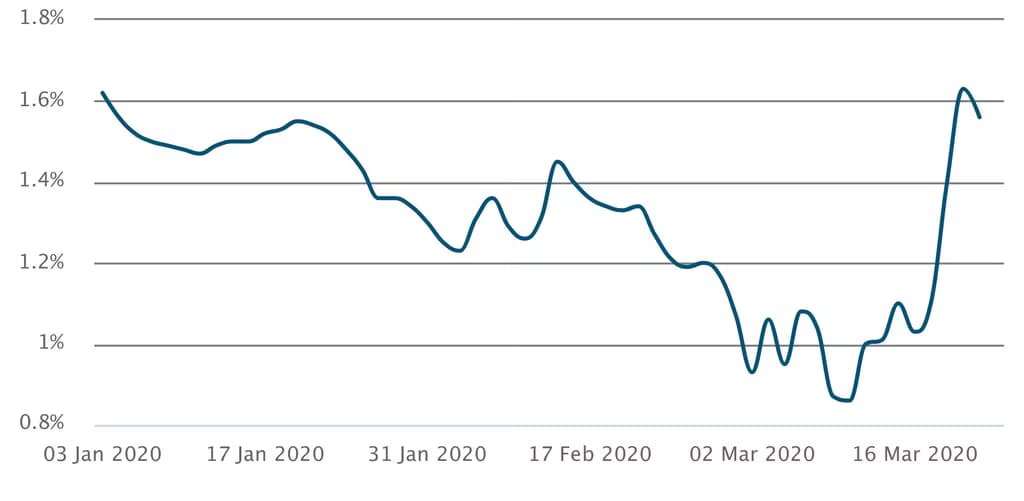
- The Bank noted that “heightened risk aversion has caused a rise in interest rates on long-term New Zealand government bonds and the cost of bank funding” – 10-year bond rates jumped 60 basis points between Monday and Thursday last week.
- The Bank is beginning with bond purchases of $750m per week on the secondary market, looking to “front-load” its efforts to support the economy.
- The Government has also announced an agreement with retail banks and the Reserve Bank to guarantee lending to businesses that would otherwise be viable but have been affected by COVID-19, as well as providing support for mortgage holders where necessary.
Ten-year government bond rates
...and our reaction
- Higher long-term interest rates at this stage of the crisis are unhelpful, pushing up bank funding costs and debt-servicing costs for businesses at the same time as many firms will be experiencing a drop in revenue and, consequently, cashflow issues.
- The Reserve Bank is not aiming to reduce the government’s financing costs in the face of increasing government spending and rising debt levels, although this outcome is a side-effect of the Bank’s actions to bring down interest rates.
- Bond purchases of $30b represent approximately 40% of the government’s current debt, which is the maximum the Bank believes it can purchase without reducing liquidity in the market and unduly influencing interest rates.
- Future increases in government debt could create scope for the Bank to increase its total bond purchases, although any lift from the current cap of $30b would represent additional quantitative easing and so would require an additional mandate from the Monetary Policy Committee.
- The Reserve Bank is not clear at this stage what its next support measure for the economy would be, but it has ruled out a negative official cash rate (OCR), and it is also unlikely to purchase interest rate swaps (which are a key factor determining fixed mortgage rates, but they are currently consistent with the Bank’s forward guidance for the OCR).
Latest updates
Premium

Monetary policy review
OCR up for first time in three years, as expected
Wed 8 Jul 2026
 2.5% Official cash rate from 2.25%
 Inflation now expected by the Bank to peak at 3.9%pa
 Further rate rises likely but uncertainty about the timing
Premium
Monetary policy review
Split decision keeps OCR at 2.25% for now
Wed 27 May 2026
 2.25% Official cash rate unchangedCasting vote made by Governor with a 3-3 vote split among Committee membersRBNZ forecast OCR to reach 3% by end of 2026
Monetary policy review
Reserve Bank holds at 2.25%, but watches vigilantly
Wed 8 Apr 2026
2.25% Official cash rate unchangedBank places more emphasis on potential inflationary risks4.2% Annual inflation forecast to accelerate by June this yearMonetary policy review
OCR on hold, but set to lift slightly quicker
Wed 18 Feb 2026
2.25% Official cash rate (OCR) unchangedDec-26 qtr First OCR rise now expected a quarter earlier than last MPS Sep or Oct Financial markets picking for the first increase