
Our take on the latest Employment indicators (Mon 13 Jan 2025)



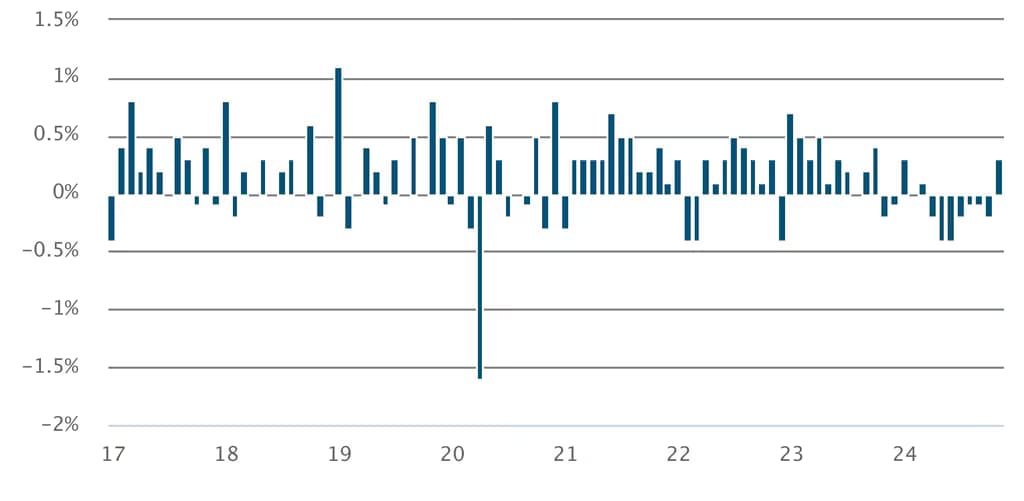
Filled jobs up 0.3% in November (sa)
Sustained (small) drop in public admin and safety jobs
Job ads showing signs of levelling out
The key numbers...
- Filled jobs rose 0.3% in November from October (seasonally adjusted), the first monthly increase in jobs since March 2024. However, we caution that this increase might eventually be revised lower, and that election employment in 2023 might also be skewing some of the apparent monthly movement.
- On an annual basis, the decline in filled jobs narrowed to -1.2%pa in November (from -1.7%pa in October), with falls still occurring across the three broad groupings of primary, goods-producing, and service industries.
- Lower government job numbers are becoming apparent, with a 0.2% annual fall in the public administration and safety industry seen in November – continuing from small falls in September and October (the October comparison was heavily influenced by comparing to the election period in 2023, but underlying trends suggest a similar fall to the surrounding months).
- In other industries, job trends are more mixed. The pace of construction job losses continues to increase, with a 5.8%pa drop in November, but industries including manufacturing, retail trade, accommodation, and professional services are showing signs of stabilising at lower levels, rather than accelerating job declines.
- The healthcare and social assistance industry continues to contribute to jobs growth, but at a slower pace, down from a peak of 5.9%pa growth at the end of 2023 to 2.9%pa in November.
- Job ads appear to be levelling out, albeit at low levels, with job ads in November up 3.4% from October (based on Infometrics seasonal adjustment of MBIE data).
First increase in jobs in eight months
Filled jobs, monthly % change, seasonally adjusted
...and our reaction
- It’s important not to overreact to the monthly increase in employment in November. This data series is regularly revised, and in recent times the revisions have normally been towards lower figures than originally published, so it’s possible, and perhaps likely, that this increase will be revised lower or flat in subsequent editions.
- The increase in jobs in November is the first in eight months, but such an increase appears too early for a definitive sign that the labour market is turning around. The annual decline of 1.2%pa seems a better way to determine the current trend in the labour market.
- The somewhat stabilising trend for industries like manufacturing, retail trade, and professional services aligns with these views of the labour market still deteriorating, but perhaps not as fast as it was.
- Monthly data is volatile, especially at an industry level, but accommodation and food services seem to have had slightly more jobs growth in November than usual. The slightly improvement in trend for hospitality would align with slightly better spending activity recorded recently.
- Some signs of stabilisation in job ads, at low levels, is an encouraging sign for the labour market, but it won’t be enough to prevent the unemployment rate rising above 5% in 2025.
- We expect that jobs activity will be cautious until businesses see sustained better spending results from households as they refix mortgages onto lower rates, which is likely to be around mid-2025.
Latest updates
Premium

Employment indicators
Further weak employment recovery
Tue 28 Jul 2026
Monthly
 0.1% Filled jobs rose in June 2026 (sa)0.6%pa Filled jobs were up from June 20251.5%pa South Island filled jobs incre from June 2025
Premium
Employment indicators
Public sector leads job gains
Mon 29 Jun 2026
Monthly
0.3% Filled jobs in May (sa)0.1% Filled jobs in April (sa)0.7% Filled jobs from May 2025Employment indicators
Healthcare leads job growth
Thu 28 May 2026
Monthly
0.2% Filled jobs in April (sa)0.5% Filled jobs from April 20255,527 Healthcare jobs over the year to AprilEmployment indicators
Let’s hear it for the South
Tue 28 Apr 2026
Monthly
0.3% Filled jobs in March (sa)0.2% Filled jobs in February (sa)1.5%pa South Island jobs in March