
Our take on the latest Employment indicators (Mon 1 Jul 2024)
Primary industries filled jobs down
Under-30s filled jobs down


Filled jobs up 0.9% pa in May
2.1%pa in May
4.8%pa in May
The key numbers...
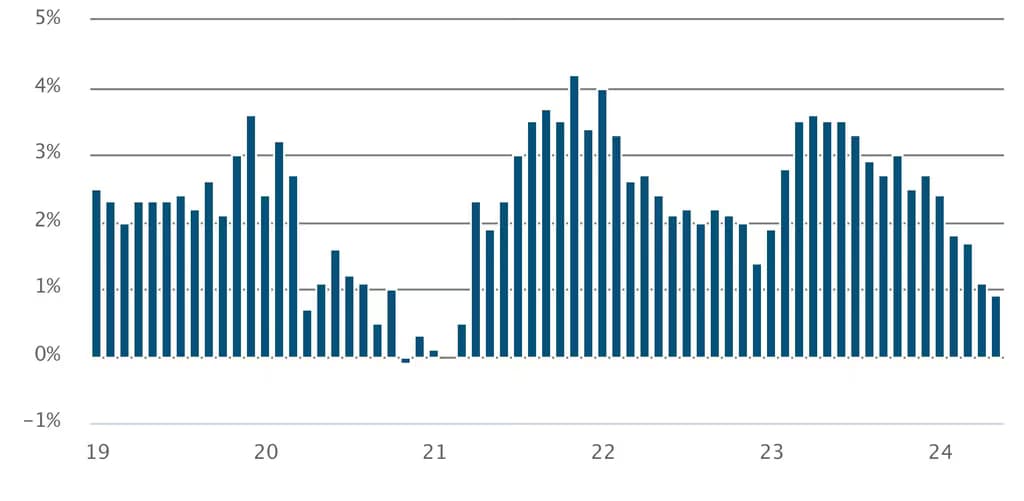
- Filled jobs in May 2024 were marginally lower (0.04%, seasonally adjusted) than in April, the second consecutive monthly decline. Annual filled jobs growth, while positive, eased to 0.9%pa, the slowest rate since December 2022.
- Growth in filled jobs has been largely held up by resilience in some service industries (1.4%pa). Conversely, goods-producing industries edged down 0.5%pa and primary industries declined 2.1%pa, driven by a fall in agricultural, forestry and fishing jobs of 2.3%pa.
- The number of jobs filled by under-30-year-olds has fallen 4.8%pa in May 2024, while jobs filled by over-30-year-olds have risen 2.2%. Jobs filled by over-30s have consistently been growing, but the decline in under-30s jobs has become more pronounced over the past year.
Filled jobs slow in May 2024
Filled jobs, annual % change
...and our reaction
- Industries like arts and recreation services, electricity, gas, water, and waste services, and healthcare remain resilient with growth in job numbers of between 5.5% and 7.2%pa.
- Job numbers in public administration are 3.4% higher than a year ago. Consultation around job cuts is still taking place across key public sector organisations, so the effects on employment figures will not be fully visible for some time.
- Industries including agriculture, forestry, and fishing, manufacturing, construction, retail, and hospitality are showing signs of struggling. Annual declines in employment across these industries reflect squeezed profitability, falling demand, and weaker household spending.
- Although job numbers for under-30s have been declining, the sharpest falls have occurred for 15-19-year-olds (down 11%). This trend indicates that younger people are struggling to break into the labour market, and they are more likely to continue studying given the lack of openings.
- Given the constraints on labour demand as dampened economic conditions limit hiring, we expect a continued slowing of the labour market throughout the remainder of 2024 and into 2025. Fewer job opportunities will lead to a rising unemployment rate and reduce wage bargaining power for employees.
Latest updates
Premium

Employment indicators
Further weak employment recovery
Tue 28 Jul 2026
Monthly
0.1% Filled jobs rose in June 2026 (sa)0.6%pa Filled jobs were up from June 2025 1.5%pa South Island filled jobs incre from June 2025
Premium
Employment indicators
Public sector leads job gains
Mon 29 Jun 2026
Monthly
0.3% Filled jobs in May (sa)0.1% Filled jobs in April (sa)0.7% Filled jobs from May 2025Employment indicators
Healthcare leads job growth
Thu 28 May 2026
Monthly
0.2% Filled jobs in April (sa)0.5% Filled jobs from April 20255,527 Healthcare jobs over the year to AprilEmployment indicators
Let’s hear it for the South
Tue 28 Apr 2026
Monthly
0.3% Filled jobs in March (sa)0.2% Filled jobs in February (sa)1.5%pa South Island jobs in March