Non-residential building consents
Pockets of strength persist in non-res consents
4 Apr 2024

Our take on the latest Non-residential building consents (Thu 4 Apr 2024)
Value of non-res consents
$864m


In February 2024
Office consents up 87% from three months to Feb 2023
Growth in hospital consents accelerating again after mid-2023 lull
The key numbers...
- The $864m of non-residential consents issued in February was up 3.5% from a year ago, representing a small decline in the volume of consents once building cost inflation is taken into account.
- With $279m of consents in February, offices recorded their strongest month since May 2022. Key contributors to this result were Māngere-Ōtāhuhu in Auckland ($130m of consents), Wellington City ($76m), and Tauranga $34m.
- Hospital building recorded another healthy result, with $175m of consents. This figure included a $75m consent at Waitākere Hospital, supported by several smaller projects in other parts of Auckland, as well as $12m of consents in the Kaipara District.
- Although storage building consents still totalled a solid $113m, this result was well down from $205m in February 2023. Hamilton recorded an $81m drop in storage consents, with smaller declines in Manawatū and Māngere-Ōtāhuhu.
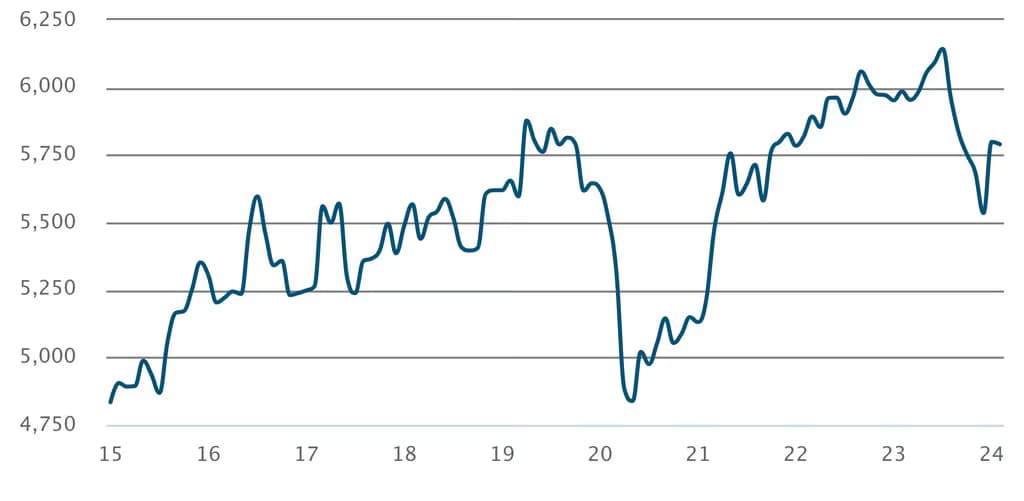
Falls in non-residential consents arrested
Annual total of non-residential consents, 2009/10 $m
...and our reaction
- After January’s very strong result, February’s consent figures continue the solid start to the year for non-residential building. After adjusting for building cost inflation and the usual seasonal pattern, February’s total was higher than any month between June and December 2023, and 11% higher than the average monthly total last year.
- The latest round of public sector money, funding hospital work, has been a key driver of the strength over the last two months. However, private sector work has also looked steadier than in the second half of 2023, with consent values over the last three months down just 0.6% from a year ago.
- Other parts of non-residential building warrant some caution. Education consents continue to soften as government budgets are tightened up, while industrial, retail, accommodation, and farm building remain under pressure as economic conditions weaken.
- We continue to expect non-residential building activity to weaken this year, but the consent data for January and February suggests there are some upside risks to that forecast.
Latest updates
Premium

Non-residential building consents
Warehouses prevent further non-res falls in June
Mon 3 Aug 2026
Monthly
$701m Value of non-res consents in June 2026
 7.4% Total non-res consents from May 2026 (seas adj)37%pa Warehouse consents from June 2025
Premium
Non-residential building consents
Non-res consents weaker still in May
Thu 2 Jul 2026
Monthly
$789m Value of non-res consents in May 2026
19% Monthly consents from May 202549% Public sector consents from May 2025Non-residential building consents
Non-res consents mostly softer in April
Wed 3 Jun 2026
Monthly
$655m Value of non-res consents in April 2026
15% Monthly consents from April 2025 Office and education consents at lowest monthly levels in 5-6 years
Non-residential building consents
Consents strong in March, but shadow of conflict looms
Fri 1 May 2026
Monthly
$862m Value of non-res consents in March 2026
15% Monthly consents from Mar 2025$119m Hostel consents from Mar 2025