
Our take on the latest Employment indicators (Wed 28 Jun 2023)


Filled jobs up 0.2% in May (seasonally adjusted)
Earnings growth per filled job eases to 6.2%pa
Filled jobs in primary industries down 3.3%pa
The key numbers...
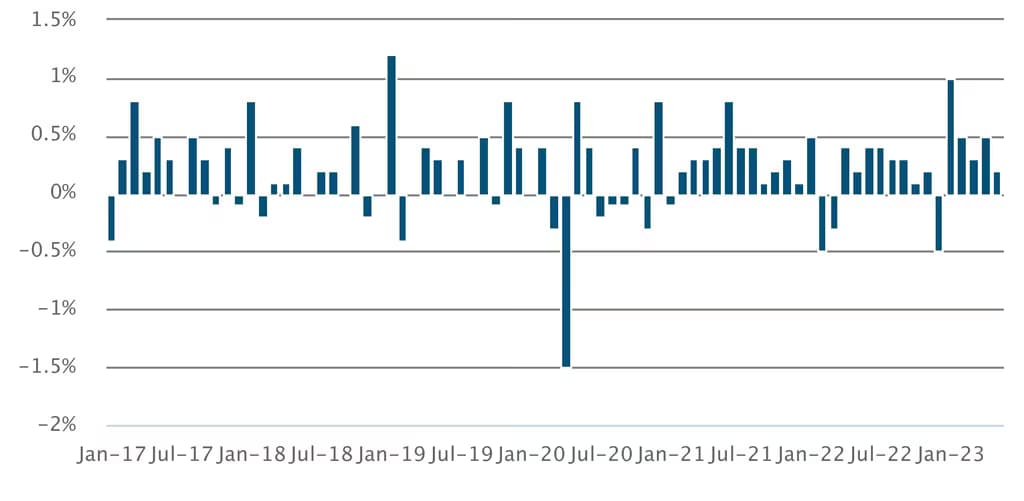
- Filled jobs lifted 0.2% in May from April (seasonally adjusted), well below the 0.6% monthly average growth in the first four months of 2023.
- Filled jobs in the service industries were up 4.3%pa from May 2022, and employment in goods-producing industries rose 2.9%pa.
- The accommodation and food services industry gained 15,150 jobs from May 2022, and health care expanded by 9,500 jobs. There were also significant increases in public administration (9,000) and education and training (8,800).
- Filled jobs in primary industries fell 3.3%pa in May, the largest annual decline in in over a decade. The agriculture, forestry, and fishing industry shrank by 4,700 jobs between May 2022 and May 2023.
- Annual jobs growth in the 25-29-year-old age group remained positive in May (0.3%pa).
- The pace of wage increases remains elevated, but growth in earnings per filled job has come down off a peak of 8.1%pa in February 2022 to 6.2%pa in May 2023.
Some momentum coming out of jobs growth
Filled jobs, monthly % change, seasonally adjusted
...and our reaction
- Employment growth remained positive across New Zealand in May, but was more subdued compared to the last few months. Annual growth in accommodation and food services is still massively elevated due to the recovery of international tourism, but has eased from peak growth of 18,000 jobs in the year to March 2023.
- Weaker migrant arrival numbers in April looks to have been a precursor to slower jobs growth in May. However, annual filled jobs growth accelerated to 4.6%pa in Auckland in May, highlighting the massive contribution of migration to our labour market.
- In turn, this contribution is likely helping to moderate wage pressures from their February 2022 peak as competition for workers eases. As skills shortages are addressed and wage inflation comes down, migrant arrivals are expected to slow, pulling annual net migration from over 72,000 in April to below 38,000 in late 2024.
- Although it is too early to say definitively, some momentum appears to be coming out of monthly jobs growth. A continuation of this trend in the coming months would be welcome news for the Reserve Bank, as a slowdown in the labour market would indicate that its monetary policy tightening has successfully flowed through the economy.
Latest updates
Premium

Employment indicators
Further weak employment recovery
Tue 28 Jul 2026
Monthly
0.1% Filled jobs rose in June 2026 (sa)0.6%pa Filled jobs were up from June 2025 1.5%pa South Island filled jobs incre from June 2025
Premium
Employment indicators
Public sector leads job gains
Mon 29 Jun 2026
Monthly
0.3% Filled jobs in May (sa)0.1% Filled jobs in April (sa)0.7% Filled jobs from May 2025Employment indicators
Healthcare leads job growth
Thu 28 May 2026
Monthly
0.2% Filled jobs in April (sa)0.5% Filled jobs from April 20255,527 Healthcare jobs over the year to AprilEmployment indicators
Let’s hear it for the South
Tue 28 Apr 2026
Monthly
0.3% Filled jobs in March (sa)0.2% Filled jobs in February (sa)1.5%pa South Island jobs in March