
Our take on the latest Employment indicators (Mon 29 May 2023)



Filled jobs up 0.6% in April (seasonally adjusted)
Annual jobs growth among 25-29-year-olds turns positive
Health care employment up 8,800 from April 2022
The key numbers...
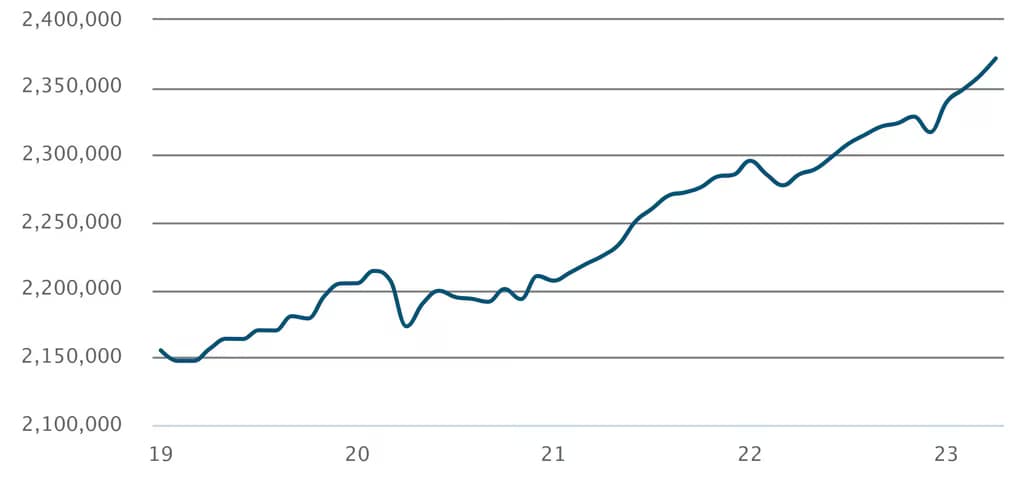
- Filled jobs lifted 0.6% in April from March (seasonally adjusted), maintaining a steep path of jobs growth.
- Annual jobs growth lifted to 3.7%pa in April, driven by a 4.3%pa increase in service industries and a 3.0%pa increase in goods-producing industries. Primary services growth remained negative, at -1.9%pa.
- The accommodation and food services industry expanded by a whopping 17,100 jobs compared to April 2022. There were also large increases in health care (8,800), manufacturing (7,400), transport, postal, and warehousing (7,400), administrative and support services (7,200), and public administration (7,100). Only agriculture, forestry, and fishing recorded a decline (down 2,900).
- Annual jobs growth among 25-29-year-olds turned positive after a long period of sustained decline. Employment growth in the 20-24-year-old age group also remained positive in April.
- Employment growth in Auckland lifted to 4.2%pa, bringing North Island employment growth to 3.5%pa. In contrast, South Island employment growth remained at 4.3%pa.
Filled jobs on a steep climb
Monthly filled jobs (millions), seasonally adjusted
...and our reaction
- Employment growth across New Zealand not only remained positive in April, but accelerated. Although growth in accommodation and food services was expected given the ongoing recovery of international tourism, large increases across a variety of industries indicates the broad-based nature of employment growth.
- An updated Green List, with further additions announced in April, is helping to direct migrant workers to areas of the economy suffering acute labour shortages. Demand for workers clearly remains strong, with work visa approvals soaring to 42,400 over the year to March 2023. In fact, April marked the strongest annual growth for the services industry since 2005. Particularly strong jobs growth in Auckland also supports the notion that employment growth is currently driven by migration.
- Having indicated that the official cash rate is now on hold after the latest increase in May, the Reserve Bank could be worried by continually surging employment figures. The labour market is usually the last part of the economy to turn, but there are no signs of a slowdown. In fact, April’s result was the opposite.
- We expect demand for labour to ease later in 2023 as consumer spending activity continues to moderate and skill shortages are addressed. However, a high number of work visa approvals now will translate to a high number of migrants in the future. With net migration already running at more than 65,000 over the year to March, the potential inflationary effect of increased demand in the economy is a very real concern.
Latest updates
Premium

Employment indicators
Further weak employment recovery
Tue 28 Jul 2026
Monthly
0.1% Filled jobs rose in June 2026 (sa)0.6%pa Filled jobs were up from June 20251.5%pa South Island filled jobs incre from June 2025Premium
Employment indicators
Public sector leads job gains
Mon 29 Jun 2026
Monthly
0.3% Filled jobs in May (sa) 0.1% Filled jobs in April (sa)0.7% Filled jobs from May 2025
Employment indicators
Healthcare leads job growth
Thu 28 May 2026
Monthly
0.2% Filled jobs in April (sa)0.5% Filled jobs from April 20255,527 Healthcare jobs over the year to AprilEmployment indicators
Let’s hear it for the South
Tue 28 Apr 2026
Monthly
0.3% Filled jobs in March (sa)0.2% Filled jobs in February (sa)1.5%pa South Island jobs in March