
Our take on the latest Employment indicators (Tue 28 Feb 2023)


Filled jobs up 0.8% in January (seasonally adjusted)
Primary sector jobs rise for first time in seven months (sa)
Total employment up 2.0%pa in January
The key numbers...
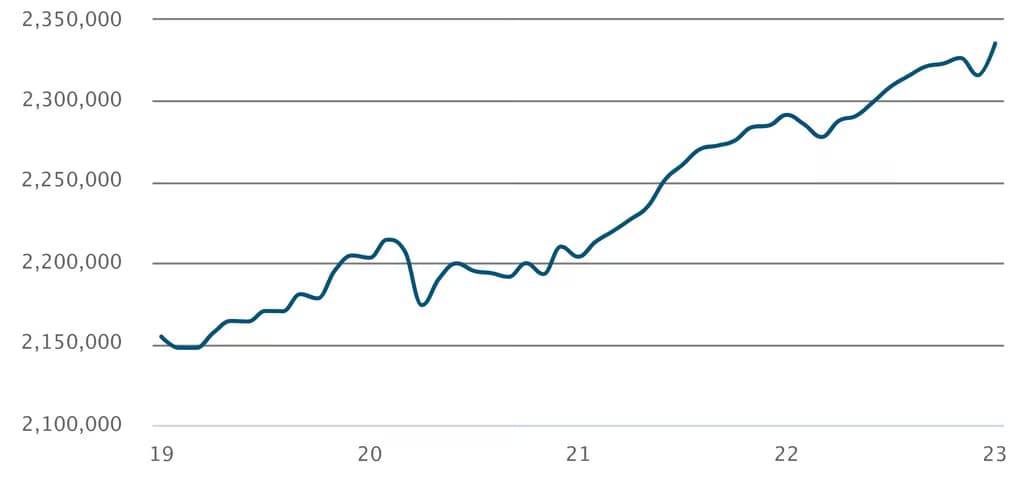
- Filled jobs rose 0.8% in January 2023 from the month before (seasonally adjusted), the strongest monthly result since December 2020, although it’s worth noting that monthly figures are regularly revised. This monthly gain more than reversed out the decline seen in December, which saw the first fall in jobs in nine months.
- Total filled jobs in January 2023 were sitting 2.0% higher than in January 2022, which is a similar level of annual growth seen over the last six months.
- Primary sector employment recorded a 0.2% increase in January 2023 from December 2022 (seasonally adjusted) after seven months of sustained declines, but unadjusted job numbers in the primary sector remained 3.7% lower than a year ago.
- Employment in service industries rose 2.4%pa in January, the strongest annual increase since April 2022. This increase was driven by strong growth in professional services (up 3.5%pa), accommodation and food services (4.9%pa), and health care (2.0%pa).
- Filled job declines among 25-29-year-olds slowed from -3.6%pa in December 2022 to -2.3%pa in January 2023. This result was the shallowest annual decline since February 2022, and comes as inward migration levels rose rapidly at the end of 2022.
- Earnings per filled job were up 6.7%pa over the twelve months to January 2023, with this earnings growth measure stabilising at these higher levels.
Slight pick-up in employment
Filled jobs, monthly, seasonally adjusted
...and our reaction
- The surprisingly strong increase in filled jobs on a seasonally adjusted basis indicates there is still, somehow, even more momentum left in the economy. Annual growth in both the goods-producing and service industries was also considerably stronger than in December.
- Jobs ads continue to ease, down 6.0% from December 2022, but are 8.0% higher than in January 2020 (pre-pandemic). Although overall demand for workers remains elevated, the continued fall in jobs ads over the last eight months indicates that businesses are cautious to hire new employees in the face of an impending economic downturn.
- Changes to the Working Holiday Visa Scheme in late 2022, including doubling the cap for 2022/23 and extending the length of visas that would have expired between August 2022 and May 2023, might have provided for spare capacity. Climbing tourism arrival numbers has clearly added to demand for workers in the tourism sector, with an addition 7,200 jobs in accommodation and food services compared to January 2022. This figure was the largest annual increase in the number of filled jobs across all industries that we track.
- We note that the economic impact from Cyclone Gabrielle is still difficult to determine, but worker demand is likely to be stronger than previously expected, given the recovery needs. The introduction of a new Recovery Visa to support pathways for engineers, technicians, and insurance assessors to assist in the recovery could support increased levels of employment in professional services, construction, and utility services in the short-term.
Latest updates
Premium

Employment indicators
Further weak employment recovery
Tue 28 Jul 2026
Monthly
0.1% Filled jobs rose in June 2026 (sa)0.6%pa Filled jobs were up from June 20251.5%pa South Island filled jobs incre from June 2025Premium
Employment indicators
Public sector leads job gains
Mon 29 Jun 2026
Monthly
0.3% Filled jobs in May (sa) 0.1% Filled jobs in April (sa)0.7% Filled jobs from May 2025
Employment indicators
Healthcare leads job growth
Thu 28 May 2026
Monthly
0.2% Filled jobs in April (sa)0.5% Filled jobs from April 20255,527 Healthcare jobs over the year to AprilEmployment indicators
Let’s hear it for the South
Tue 28 Apr 2026
Monthly
0.3% Filled jobs in March (sa)0.2% Filled jobs in February (sa)1.5%pa South Island jobs in March