
Our take on the latest Car registrations (Thu 1 Dec 2022)



Car registrations increased 2.2% in November (seasonally adjusted)
Used car registrations fell 5.7% from October (seasonally adjusted)
Large car registrations fell 1.7% in September (seasonally adjusted)
The key numbers...
- First-time car registrations increased 2.2% (seasonally adjusted) to 18,332 registrations in November.
- Government policy continued to drive market trends, as new car registrations increased 6.7% and used car registrations declined 5.7% from the previous month (both figures seasonally adjusted).
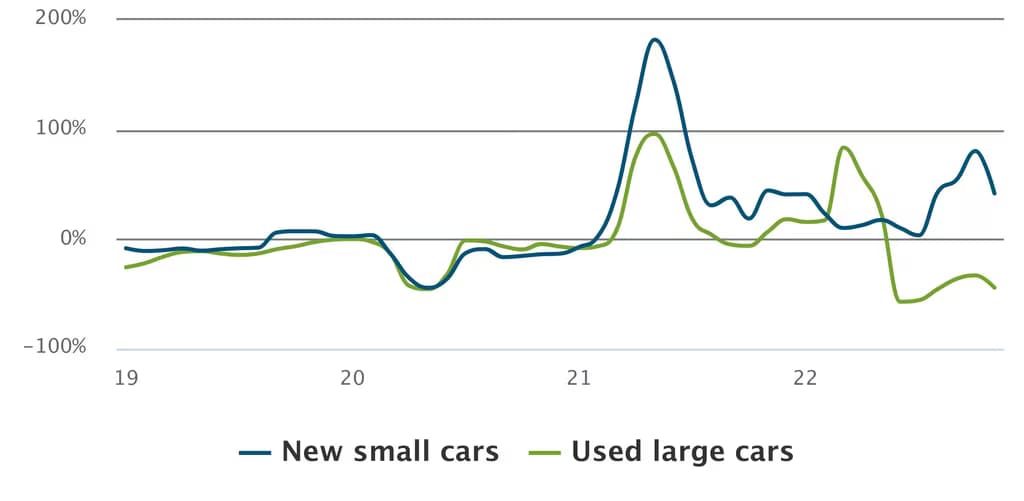
- The effect of policy was also evident in the size of cars registered, with small car registrations increasing 4.5% and large car registrations falling 1.0% in November (both figures seasonally adjusted).
- There were 2,403 first-time rental car registrations in November, up 40% from November 2021. Despite the strong growth from last November, rental car registrations are still only at 73% of pre-pandemic levels.
- Registrations of electric and hybrid vehicles were very strong in the three months ended November, with registrations of full battery electric vehicles and plug-in hybrid electric vehicles increasing by 86% and 67%pa respectively. In contrast, registrations of petrol and diesel vehicles declined, with registrations for the three months to November falling 35% and 22%pa respectively.
Discount scheme driving new buyer preferences
Running three month annual % changes
...and our reaction
- The biggest contributor to the increase in overall car registrations for November was new small car registrations, which increased 13% from October (seasonally adjusted). This lift wasn’t surprising given the continued effect of the Clean Car Discount on buyer preferences in the car market. Buyers are favouring smaller and newer vehicles because of the Discount scheme, with smaller and newer cars generally having lower emissions and therefore offering better affordability than larger and older vehicles.
- Affordability will be an increasingly crucial factor for buyers in coming months. The Reserve Bank said in November that it is engineering a recession, as it now believes that a downturn of this magnitude is necessary to tame inflation. In the Bank’s November Monetary Policy Statement, it upgraded its forecast for peak inflation to 7.5%pa for the December 2022 and March 2023 quarters. The Bank also lifted its expectations for the official cash rate (which determines market interest rates), forecasting that it will peak at 5.5% in mid-2023.
- A combination of faster inflation and higher peak interest rates will further dampen demand for cars, as households are forced to reduce their spending on big ticket items like a new car and instead focus on covering the bills for food, fuel, and the mortgage.
- Despite economic conditions that are expected to have a cooling effect on total car registrations, the share of registrations made up by small, new, or electric- or hybrid-powered vehicles will continue to increase as government policy drives buyers away from higher-emissions vehicles.
Latest updates
Premium

Car registrations
Strong car registrations despite Iran War
Thu 2 Jul 2026
Quarterly
 +19%pa New car registrations in June 2026 quarter+165%pa EV registrations in June 2026 quarterFuel prices off highs, still 19% higher than pre-conflict
Premium
Car registrations
EV car registrations surge following fuel price spike
Thu 2 Apr 2026
Quarterly
4x higher Full battery EV registrations than in March 2025 Fuel prices rise 30%+ in March 2026Car registrations trending lower before the war
Car registrations
Total car registrations slowly lifting from low
Mon 12 Jan 2026
Quarterly
183,099 Total car registrations in the year to December 2025, down 1.1%pa
Quarterly new car registrations up 6.7%paQuarterly used car registrations down 4.1%paCar registrations
New car registrations lift the annual total from a low
Wed 1 Oct 2025
Quarterly
182,258 Total car registrations in the year to September, up 5.7%pa
New car registrations up 20%pa from September 2024Used car registrations down 7.3%pa from September 2024