
Our take on the latest Employment indicators (Fri 28 Oct 2022)


Filled jobs up 0.4% in September (seasonally adjusted)
Canterbury job growth at 3.2%pa
IT jobs grow by 9.9%pa
The key numbers...
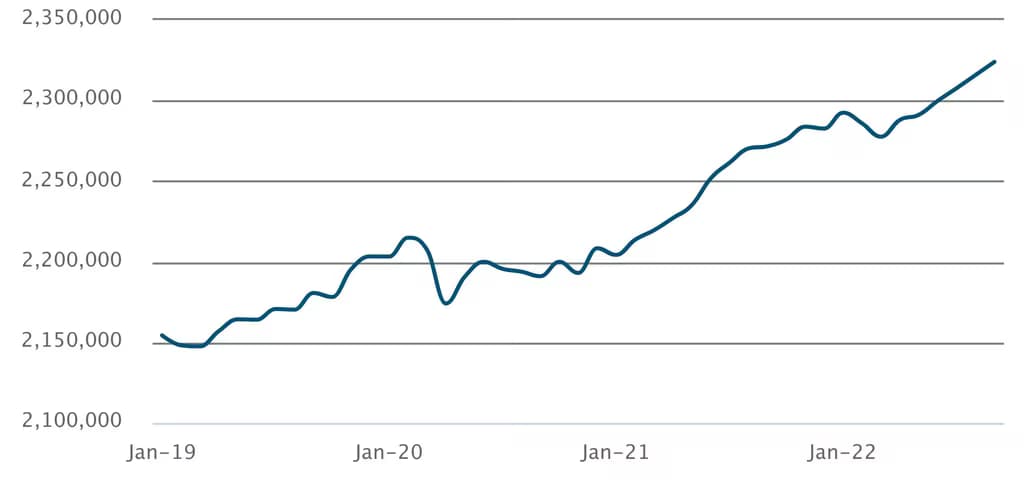
- There were 10,646 additional filled jobs in September, taking the total to just over 2.3m. After adjusting for seasonal effects, this lift was a 0.4% increase from August.
- Job numbers in the primary sector fell faster than in the goods-producing or service sectors, down 1.1% in September. Goods-producing and service sectors increased 0.3% and 0.5% from August respectively (all figures seasonally adjusted).
- The proportion of jobs filled by 25–29-year-olds was lower than the previous year again in September, down 2.9% compared to September 2021. The same is true of 45–49-year-olds, which declined 1.0% compared to last year. People aged 15-19 continue to fill more jobs, up 19% from September 2021.
- Over the last year, job growth has been fastest in Canterbury, with filled jobs up 3.2%pa. Hawke’s Bay had the most sluggish growth, but filled jobs were still up 1.0%pa.
- The agricultural industry has experienced the weakest job growth over the last 12 months, with filled jobs down 3.0%pa. Information and telecommunications jobs have grown the fastest, up 9.9% compared to September 2021.
Filled jobs edge up for sixth consecutive month
Monthly filled jobs, seasonally adjusted
...and our reaction
- Filled jobs recorded moderate growth in September, continuing the trend of the last six months. The slight decline in job numbers at the end of March appeared to indicate that New Zealand’s labour supply was nearing its limit, but since then an additional 28,421 jobs have been filled. This unexpected job growth is particularly impressive given the limited number of migrant arrivals in this period.
- The continued decline in the number of jobs filled by 25-29-year-olds in the second half of 2022 indicates the brain drain is ongoing. We anticipate New Zealand’s population statistics for the September quarter will continue to show young people flocking overseas, largely either leaving for an OE or for better cost-of-living conditions.
- We anticipate that earnings growth will remain strong throughout the next year. We expect a limited supply of labour will persist, driving earnings up, before tightening monetary policy and softening economic growth lift the unemployment rate to 4.1% by the first quarter of 2024. This higher level of unemployment will start to ease the tightness that has characterised New Zealand’s labour market for the last 18 months.
Latest updates
Premium

Employment indicators
Further weak employment recovery
Tue 28 Jul 2026
Monthly
0.1% Filled jobs rose in June 2026 (sa)0.6%pa Filled jobs were up from June 20251.5%pa South Island filled jobs incre from June 2025Premium
Employment indicators
Public sector leads job gains
Mon 29 Jun 2026
Monthly
0.3% Filled jobs in May (sa) 0.1% Filled jobs in April (sa)0.7% Filled jobs from May 2025
Employment indicators
Healthcare leads job growth
Thu 28 May 2026
Monthly
0.2% Filled jobs in April (sa)0.5% Filled jobs from April 20255,527 Healthcare jobs over the year to AprilEmployment indicators
Let’s hear it for the South
Tue 28 Apr 2026
Monthly
0.3% Filled jobs in March (sa)0.2% Filled jobs in February (sa)1.5%pa South Island jobs in March