
Our take on the latest Non-residential building consents (Mon 1 Aug 2022)
Value of non-res consents
$655m


In June 2022
Consent volumes up 1.0% from June 2021
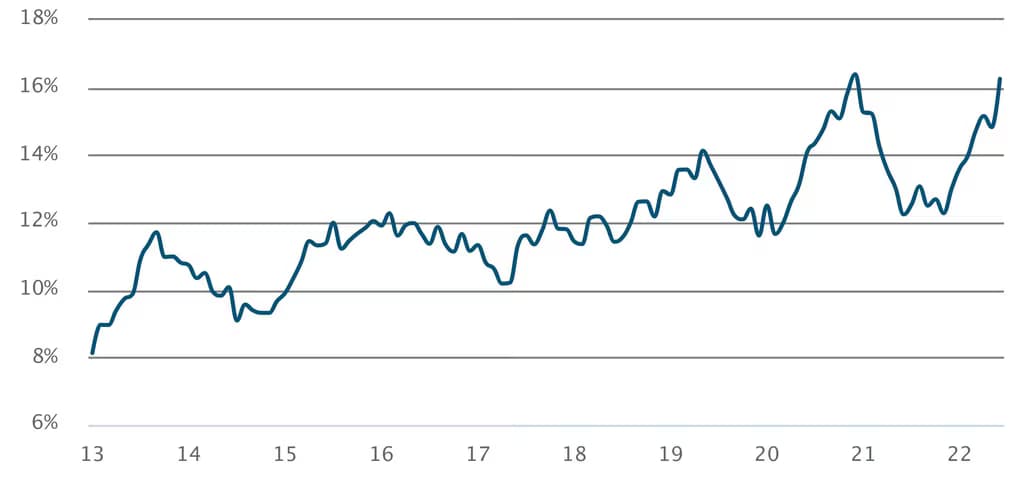
Biggest month on record for warehouse consents
The key numbers...
- Non-residential consents continued their variable performance in June, with the 11% increase in total consent values from June 2021 likely to be only barely ahead of building cost inflation.
- Strong monthly results were recorded for warehouse consents ($205m) and education consents ($155m). Technical issues with Stats NZ’s data provision means we are unable to verify the drivers of this growth, but information from BCI NZ suggests the strength in warehousing is due to projects in Auckland, while a $28m consent for stage one of Ashburton College’s redevelopment also looks to have been issued.
- Offsetting the strength of warehouses and education consents in June were sizable falls in social consents (down $69m from June last year to $42m), offices (down $65m to $59m), hotels (down $26m to $12m), and factories (down $24m to $41m).
- Mirroring the growth by building type, Auckland’s consents were up $92m (51%) from a year ago, with a $35m (73%) increase in Canterbury. Wellington’s consents dropped by $56m (70%), while Waikato’s slipped $26m (31%).
Warehousing's share of non-res building grows
Warehouses as a % of total non-res consents, annual average
...and our reaction
- We had anticipated considerably more strength in non-residential consents in June given the relatively strong results in three of the previous four months. As a result, total consents for the June quarter have come in almost $400m below our expectations.
- The biggest disappointments were for offices, social buildings, factories, and hospitals. In contrast, warehouse consents were about 15% higher than forecast.
- We still expect growth in social and hospital building consents, which are mostly funded by public money, to accelerate significantly in the second half of 2022, with several major projects in the pipeline for both building types.
- Today’s weaker consent result suggests growth in non-residential work put in place over the next nine months will not be as rapid as our recent forecasts showed. However, we note that disrupted supply chains, and capacity and labour pressures, remain problematic across the construction industry. These issues are still likely to constrain growth in completed work for the rest of 2022 and into 2023.
Latest updates
Premium

Non-residential building consents
Warehouses prevent further non-res falls in June
Mon 3 Aug 2026
Monthly
$701m Value of non-res consents in June 2026
 7.4% Total non-res consents from May 2026 (seas adj)37%pa Warehouse consents from June 2025
Premium
Non-residential building consents
Non-res consents weaker still in May
Thu 2 Jul 2026
Monthly
$789m Value of non-res consents in May 2026
19% Monthly consents from May 202549% Public sector consents from May 2025Non-residential building consents
Non-res consents mostly softer in April
Wed 3 Jun 2026
Monthly
$655m Value of non-res consents in April 2026
15% Monthly consents from April 2025 Office and education consents at lowest monthly levels in 5-6 years
Non-residential building consents
Consents strong in March, but shadow of conflict looms
Fri 1 May 2026
Monthly
$862m Value of non-res consents in March 2026
15% Monthly consents from Mar 2025$119m Hostel consents from Mar 2025