
Our take on the latest Employment indicators (Mon 29 Aug 2022)



Total earnings in July up 6.1%pa
Construction job growth remains a slow 4.8%pa
Employment of workers in mid-late 20s down 3%pa
The key numbers...
- Although annual growth in filled job numbers was fairly steady at 2.3%pa in July, the 0.5% seasonally adjusted increase in jobs from June was the best monthly result since August last year.
- Job growth over the last month was driven by higher job numbers in the goods-producing industries, up 0.8% from June, even as primary industries employment edged down 2.0% (all figures seasonally adjusted).
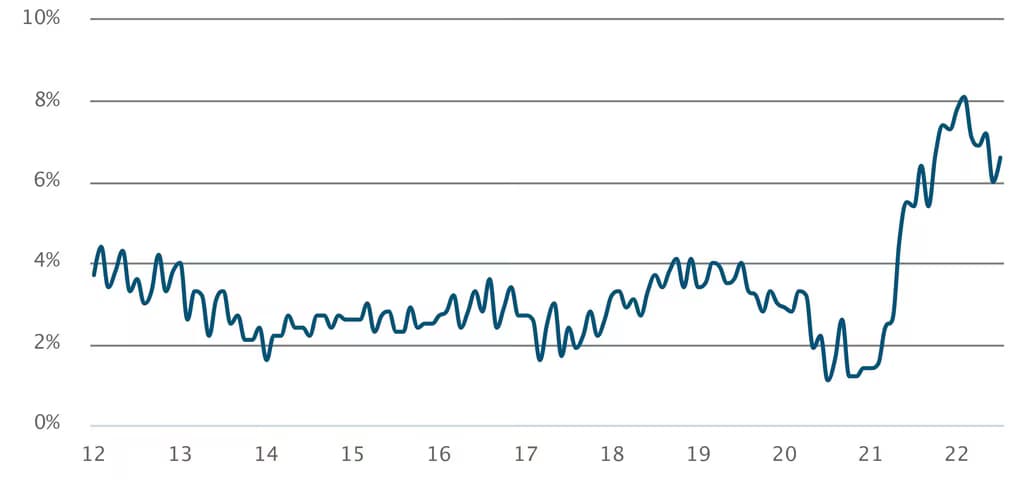
- Total earnings growth has been 9.9%pa over the 12 months to July 2022. Earnings per job were up an average of 6.6%pa over the last year, with monthly earnings per job up $743 from July 2021.
- Job growth is positive across all regions, with Tasman (3.9%pa) and Otago (3.1%pa) experiencing the fastest increases, with Southland (0.3%pa) and the West Coast (0.9%pa) recording the slowest growth.
- Employment for workers in their mid-to-late 20s is down 3.0% from a year ago, while employment of 15-19-year-old workers continues to climb, up 16%pa. Employment of over-65s is up 5%pa, helping to stretch the labour market’s capacity.
- Jobs in the electricity, gas, water and waste services industry have grown by an impressive 8.3% in the last year, adding 1,700 jobs. Construction jobs grew 4.8%pa in the year to July 2022, adding 9,300 jobs, but this rate has slowed compared to growth in the 2020-21 period. Job numbers have eased in the agriculture, forestry, and fishing industry, down 2.5%pa, and there was a 1.1%pa decline in jobs in the accommodation and food service industry.
Earnings remain elevated
Annual average % change
...and our reaction
- These numbers indicate the labour market is at or beyond capacity. Strong annual earnings growth coupled with a slow increase in filled jobs imply that wages are being driven up as businesses struggle to find workers. Work visas issued remain below pre-pandemic levels, meaning migrant worker supply is constrained as well.
- The construction industry may be close to capacity, with weaker job growth in June and July 2022. There is a high volume of infrastructure and building work in the pipeline, but activity could come under pressure as cost increases and worker shortages undermine the viability of planned projects.
- A healthy job market, with high earnings and a strong labour demand, is a positive sign for households. However, this positive factor is currently being swamped by the negative effects of tighter monetary policy and rising household costs.
- Although the latest monthly increase in job numbers is a good result in the face of low unemployment, the continued decline of employment among 25-29-year-olds is concerning. The “brain drain” of young workers may exacerbate labour shortages.
Latest updates
Premium

Employment indicators
Further weak employment recovery
Tue 28 Jul 2026
Monthly
0.1% Filled jobs rose in June 2026 (sa)0.6%pa Filled jobs were up from June 20251.5%pa South Island filled jobs incre from June 2025Premium
Employment indicators
Public sector leads job gains
Mon 29 Jun 2026
Monthly
0.3% Filled jobs in May (sa)0.1% Filled jobs in April (sa)0.7% Filled jobs from May 2025Employment indicators
Healthcare leads job growth
Thu 28 May 2026
Monthly
0.2% Filled jobs in April (sa)0.5% Filled jobs from April 20255,527 Healthcare jobs over the year to AprilEmployment indicators
Let’s hear it for the South
Tue 28 Apr 2026
Monthly
0.3% Filled jobs in March (sa)0.2% Filled jobs in February (sa)1.5%pa South Island jobs in March