
Our take on the latest Non-residential building consents (Fri 1 Jul 2022)
Value of non-res consents
$1,041m

In May 2022
Consents volumes grew an estimated 20%pa in May
Canterbury consents up 46%pa in
the three months to May
The key numbers...
- Non-residential consents reached $1.04b in May, the largest monthly total on record. Nominal consent values were up 33%pa in May, and even with cost growth estimated at over 10%pa, real growth is likely to be around 20%pa – still an impressive result.
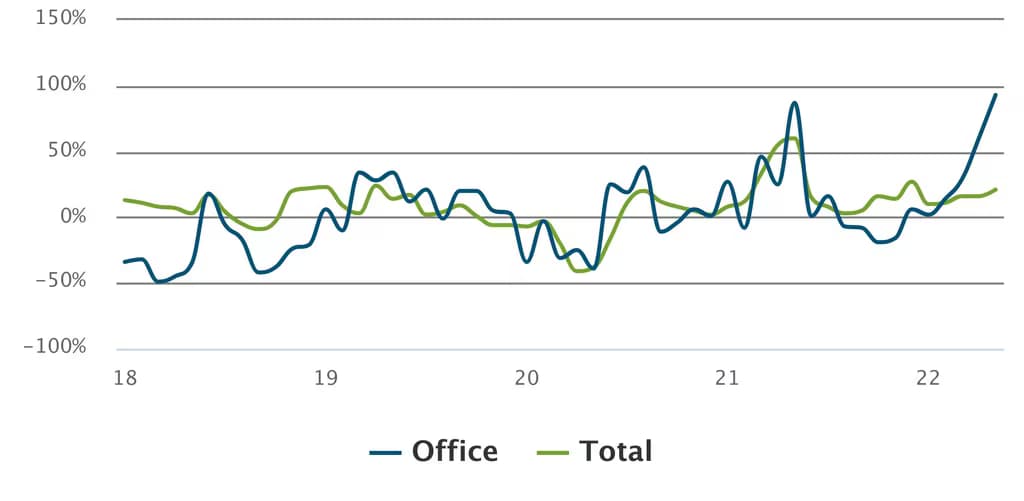
- The strength of consents issued for offices continued, with growth of 93%pa in the three months to May, and $356m of consents in the May month alone. Other strong build types included social, cultural, and religious (SCR) buildings and warehouses, up 160% and 56%pa in the three months to May respectively.
- Canterbury consents reached their highest level since April
2019, totalling $235m, up 34%pa over the 12 months to May. Auckland consents
were up 16% and Wellington up 12%pa over the same period. Activity fell in
Southland (54%), Marlborough (32%), Bay of Plenty (10%) and Waikato (1%) over
the last 12 months.
Office consents take off in 2022
Three month average % change
...and our reaction
- Non-residential consents experienced strong growth in May, hitting their highest value on record. We expect non-residential consents will have strong growth over the next 12 to 18 months, as public funding remains high, supporting growth in SCR, hospital, and education building. Additionally, favourable conditions for exporters, such as high import costs and global supply delays, will encourage warehouse and factory construction.
- The strength of office consents is surprising. The growing popularity of hybrid and remote work arrangement, combined with high vacancy rates for office spaces, means we expected weaker demand for office buildings. However, perceptions around the importance of one’s working environment may have changed over the last two years, which could mean businesses struggling to retain staff in New Zealand’s tight labour market are using new office space as a bargaining chip.
- Christchurch and Auckland have strong non-residential
consent numbers, which has created a firm pipeline for construction in these
cities for the next 12 to 18 months. We still expect that by mid-2023, economic
conditions will drag consents back to levels seen in early 2022. High building
cost growth will reduce the viability of new projects, and higher interest
rates and low economic growth will also weaken demand for space.
Latest updates
Premium

Non-residential building consents
Warehouses prevent further non-res falls in June
Mon 3 Aug 2026
Monthly
$701m Value of non-res consents in June 2026
 7.4% Total non-res consents from May 2026 (seas adj)37%pa Warehouse consents from June 2025
Premium
Non-residential building consents
Non-res consents weaker still in May
Thu 2 Jul 2026
Monthly
$789m Value of non-res consents in May 2026
19% Monthly consents from May 202549% Public sector consents from May 2025Non-residential building consents
Non-res consents mostly softer in April
Wed 3 Jun 2026
Monthly
$655m Value of non-res consents in April 2026
15% Monthly consents from April 2025 Office and education consents at lowest monthly levels in 5-6 years
Non-residential building consents
Consents strong in March, but shadow of conflict looms
Fri 1 May 2026
Monthly
$862m Value of non-res consents in March 2026
15% Monthly consents from Mar 2025$119m Hostel consents from Mar 2025