
Our take on the latest Residential building consents (Tue 3 May 2022)



Dwelling consents totalled 5,303 in March
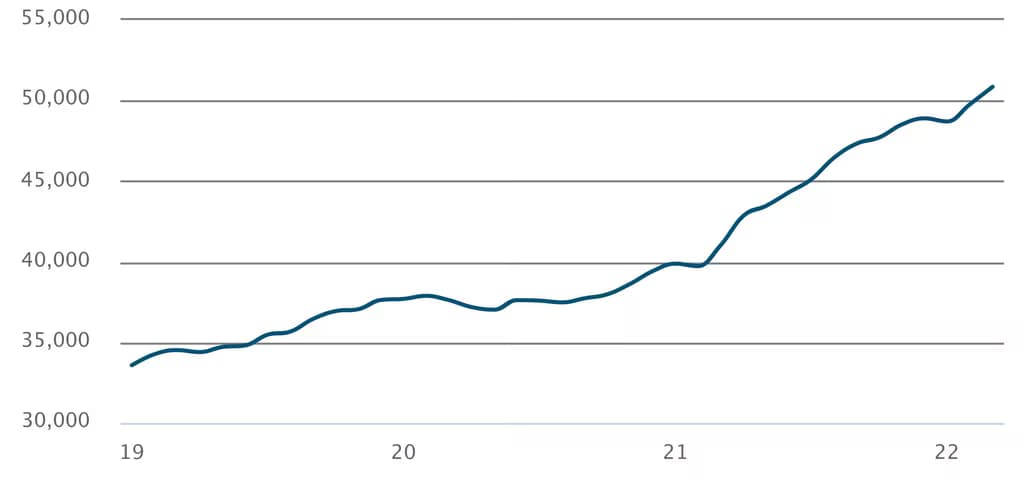
Annual consent total up to 50,858
Townhouse consents grew 66%pa in the March quarter
The key numbers...
- There were 5,303 new dwelling consents issued in March, up 5.8% from February (seasonally adjusted) and 26% higher than in March 2021. This monthly total was the strongest on record.
- There were signs of softness in house consents in the March quarter, with consent number in the three months to March down 3.1%pa. For non-house consents, 616 were issued for appartments, 2,172 were issued for townhouses, and 212 were issued for retirement units.
- Townhouses continue to experience strong growth, as 2,172 consents were issued in March. Townhouse consents grew by 66%pa in the March quarter, with 2,005 more consents issued than in the March 2021 quarter.
- Townhouse consent growth was concentrated in the major centres, with Auckland, Canterbury, and Wellington issuing the most consents. Auckland consents grew 61%pa in the March quarter, with 1,091 more consents being issued than a year earlier. Canterbury has been busy, as townhouse consents grew 150%pa over the same period, with 524 more consents issued than in the March 2021 quarter.
- Regional dwelling consent growth varied sharply across the country. Hawke’s Bay, Marlborough, and Manawatū-Whanganui experienced a decline in dwelling consents in the March quarter of 38%, 33%, and 20% respectively. Nelson, Gisborne, and Otago experienced the strongest growth, at 78%, 56%, 36%pa respectively.
Annual consents pass 50,000
Annual dwelling consents
...and our reaction
- House consents continue to weaken due to lower affordability when compared to non-house options, such as apartments and townhouses. As the areas with the highest proportion of attached dwelling consents, New Zealand’s three largest cities continue to lead the charge with non-house building activity.
- Canterbury continues to show the largest rate of consent growth, as demand remains high due to better housing affordability when compared to Auckland and Wellington. This better level of affordability is reiterated by the strong growth in attached dwelling consents in Canterbury, which had the highest growth of any region in non-house consents for the March quarter when compared to the previous year.
- Our most recent forecast expected dwelling consents to peak at 49,947pa in the second quarter of 2022. The current result of 50,858 has surpassed our forecasts, but we still expect a slowdown in consent numbers in the second half of 2022 because of falling house prices, higher mortgage rates, and slow population growth.
Latest updates
Premium

Residential building consents
Residential consents fall 3.6% in June
Mon 3 Aug 2026
Monthly
40,581 Annual consents over the June 2026 year
19% June 2026 consents over the June 2026 year 3.6% June 2026 consents from May on a seas. adj. basis
Premium
Residential building consents
Residential consents fall 4.0% in May
Thu 2 Jul 2026
Monthly
39,737 Annual consents over May 2026 year4.0% May 2026 consents from April on a seas. adj. basis22%pa Townhouse consents over May 2026 yearResidential building consents
Residential consents jump up 11% in April
Wed 3 Jun 2026
Monthly
39,087 Annual consents over April 2026 year11% April 2026 consents from March on a seas. adj. basis19%pa Multi-unit consents over April 2026 yearResidential building consents
Residential consent momentum trends sideways
Fri 1 May 2026
Monthly
37,813 Annual consents over March 2026 year 3,300pm Consents trend sideways on a seas. adj. basis14%pa Townhouse consents over March 2026 year