
Our take on the latest Residential building consents (Thu 31 Mar 2022)



Monthly consents rose 10% (sa) in Feb
Townhouse consents growth accelerated to 46%pa over the year to Feb 2022
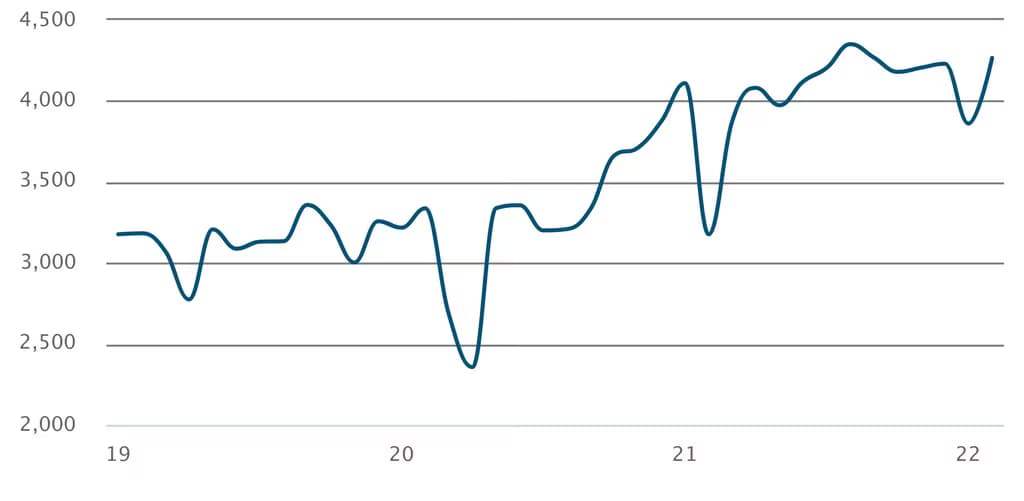
Monthly consents look to plateau at around 4,200 (sa)
The key numbers...
- Residential consents bounced back strongly from January’s unexpectedly weak result, rising 10% (seasonally adjusted), more than erasing January’s 8.7% drop. The 4,195 consents issued in February was up 34%pa from February 2021.
- Annual consents have risen to 49,773 and would require 4,445 consents in March 2022 to crack the 50,000pa mark. That result would be the fourth-highest monthly total recorded but is definitely achievable.
- Townhouses drove the resumption in consent strength, rising by 108%pa to 1,842 consents in February, the second-highest monthly total on record. Monthly Auckland townhouse consents nearly doubled, and Canterbury consents hit 385, the highest monthly total ever for townhouses in the region.
- Retirement unit consents are regaining momentum, with annual consents up 64%pa after a subdued period at the start of COVID-19. Standalone house growth remains more muted, up just 0.3%pa in February, and down 2.6%pa on a year-end basis. The trend for apartments is even more subdued, down 0.5%pa on a year-end basis.
Monthly consents plateau around 4,200
Monthly dwelling consents, seasonally adjusted
...and our reaction
- Building consents in February reversed January’s fall and moved back in line with the high level of consents observed throughout 2021. Consents do appear to have plateaued at about 4,200 per month on average.
- The shift towards denser dwellings continues, with townhouses leading the charge. Standalone house consents are still rising – just. But standalone houses’ share of the market is being squeezed as development plans increasingly favour attached dwellings that have smaller land requirements and are more affordable.
- We expect momentum in consents will pull back in 2022, as supply constraints, labour pressures, rising costs, and concerns over future profitability see fewer new projects being progressed.
- The housing market appears to be turning faster than first expected, given rapidly rising mortgage rates, more limited credit availability, and high inflation biting into household spending and saving. A change in house price expectations means developers won’t be able to make the same return as they’d have previously been expecting.
Latest updates
Premium

Residential building consents
Residential consents fall 3.6% in June
Mon 3 Aug 2026
Monthly
40,581 Annual consents over the June 2026 year
19% June 2026 consents over the June 2026 year 3.6% June 2026 consents from May on a seas. adj. basis
Premium
Residential building consents
Residential consents fall 4.0% in May
Thu 2 Jul 2026
Monthly
39,737 Annual consents over May 2026 year4.0% May 2026 consents from April on a seas. adj. basis22%pa Townhouse consents over May 2026 yearResidential building consents
Residential consents jump up 11% in April
Wed 3 Jun 2026
Monthly
39,087 Annual consents over April 2026 year11% April 2026 consents from March on a seas. adj. basis19%pa Multi-unit consents over April 2026 yearResidential building consents
Residential consent momentum trends sideways
Fri 1 May 2026
Monthly
37,813 Annual consents over March 2026 year3,300pm Consents trend sideways on a seas. adj. basis14%pa Townhouse consents over March 2026 year