
Our take on the latest Employment indicators (Tue 28 Sept 2021)


Filled jobs rise 0.7% (seasonally adjusted) in August
Stronger growth in earnings per job
Jobseekers up 8k from pre-Lockdown 2.0
The key numbers...
- August filled jobs figures show still-rising levels of employment across the country, with another healthy monthly rise in jobs of 0.7% (seasonally adjusted).
- Employment growth remains strongest in the North Island, with 4.2%pa growth, compared to 3.3%pa growth in the South Island.
- Three key sectors are leading jobs growth across New Zealand, with the health, construction, and public sectors combined adding nearly 42,000 jobs in the last 12 months. These sectors alone account for 49% of the nearly 86,000 net additional jobs across New Zealand.
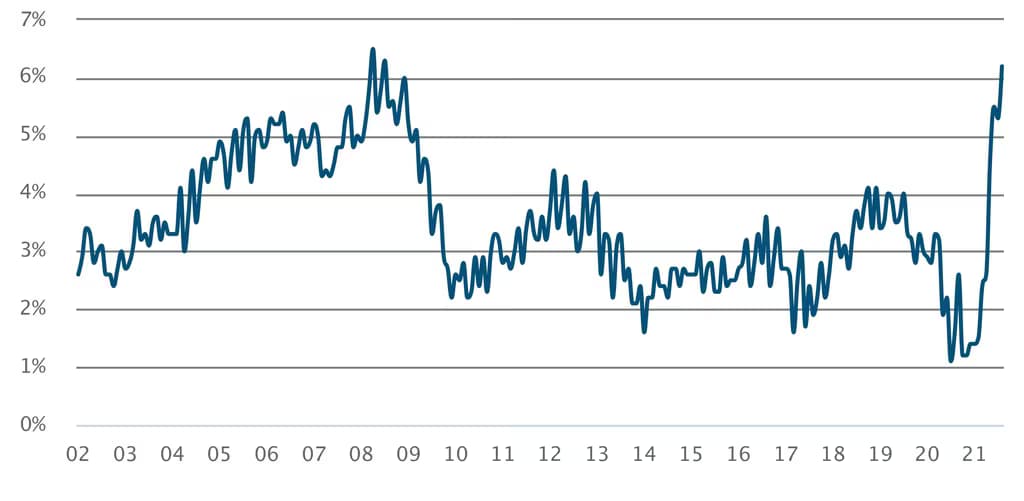
- Earnings per filled job continue to rise, with a 6.2% increase on average across the last year – the fastest increase in earnings per job since mid-2008.
- Weekly Jobseeker Support numbers show an 8,000 person increase since Lockdown 2.0 began, taking the total number of recipients to 194,900 as at 17 September. This rise effectively reverses out the previous four months’ worth of declines in Jobseeker Support numbers.
Strong earnings per jobs growth indicates wage pressures
Annual average % change
...and our reaction
- Labour market tightness remains, with August 2021 numbers showing a still-strong rise in employment. There’s no evidence yet of any effect of Lockdown 2.0 on aggregate employment, but given many people would have been working for most of the August month, we weren’t expecting to see much.
- Weekly filled jobs data hasn’t shown anything dramatic yet either, although Jobseeker Support numbers have increased. We still expect a blip in job numbers over the next month or so, but so far the effect on employment of the Delta outbreak has been limited.
- Wider labour market pressures remain, with the strong growth in earnings per job indicating that there is stronger wage pressure than we’ve seen in over a decade. This trend supports what we’ve been hearing from businesses and reinforces the labour market constraints that are now clear to see.
- Regional and industry-level employment figures emphasise our analysis of the growth hotspots across the country, with activity stronger in the North Island than in the South Island, and with rising health, construction, and public sector activity bolstering job numbers.
Latest updates
Premium

Employment indicators
Further weak employment recovery
Tue 28 Jul 2026
Monthly
 0.1% Filled jobs rose in June 2026 (sa)0.6%pa Filled jobs were up from June 20251.5%pa South Island filled jobs incre from June 2025
Premium
Employment indicators
Public sector leads job gains
Mon 29 Jun 2026
Monthly
0.3% Filled jobs in May (sa) 0.1% Filled jobs in April (sa)0.7% Filled jobs from May 2025
Employment indicators
Healthcare leads job growth
Thu 28 May 2026
Monthly
0.2% Filled jobs in April (sa)0.5% Filled jobs from April 20255,527 Healthcare jobs over the year to AprilEmployment indicators
Let’s hear it for the South
Tue 28 Apr 2026
Monthly
0.3% Filled jobs in March (sa)0.2% Filled jobs in February (sa)1.5%pa South Island jobs in March