
Our take on the latest Non-residential building consents (Fri 30 Jul 2021)
Value of non-res consents
$561m


In June 2021
Consents fell 30% (seasonally adjusted)
Factory consents up 88%pa in June quarter
The key numbers...
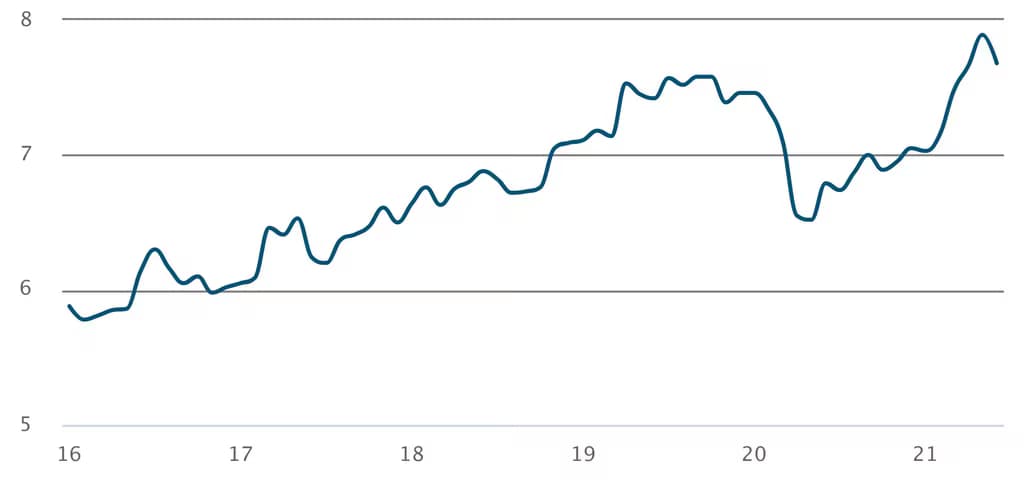
- The total value of non-residential consents was down by 27%pa in June 2021. This weaker result follows four months of solid growth, meaning that non-residential consent values for the year to date are still 20%pa higher than in 2020.
- Total non-residential consent values of $1,885m in the June quarter were $104m short of our forecast.
- The strongest consents by building type in June were offices ($123m) and social, cultural, and religious buildings ($104m), making up 40% of non-residential consents in June.
- Factory consents, although not as strong as the last couple of months, have mostly maintained their momentum and were up by 88%pa in the June quarter.
- Warehouse and farm building consents were the only building types where the value of consents fell in the June quarter, down 35% and 26%pa, respectively.
- Waikato, Wellington, and Southland were all comparatively weak in the June quarter, with consent values down 26%, 32%, and 83%pa respectively.
Value of non-residential consents
Annual running total, $bn
...and our reaction
- Non-residential consents were soft in the June month, but this result is not reflective of the June quarter and the year so far, where non-residential consenting activity has been strong. Consents so far this year suggest there is a sizable pipeline of work to come over the next 12 months.
- A huge question on many builders’ minds is the escalating cost of building, which recent inflation data has confirmed is fraught in the residential subsector. Uncertainty around supply chain issues and whether cost escalation will be temporary or sustained for several years will delay the due-diligence phase and may give some developers cold feet.
- A recent shift in interest rate expectations towards earlier rate rises will also mean developers may be re-crunching the numbers before their project gets the green light.
Latest updates
Premium

Non-residential building consents
Warehouses prevent further non-res falls in June
Mon 3 Aug 2026
Monthly
$701m Value of non-res consents in June 2026
7.4% Total non-res consents from May 2026 (seas adj)37%pa Warehouse consents from June 2025Premium
Non-residential building consents
Non-res consents weaker still in May
Thu 2 Jul 2026
Monthly
$789m Value of non-res consents in May 2026
19% Monthly consents from May 202549% Public sector consents from May 2025Non-residential building consents
Non-res consents mostly softer in April
Wed 3 Jun 2026
Monthly
$655m Value of non-res consents in April 2026
15% Monthly consents from April 2025 Office and education consents at lowest monthly levels in 5-6 years
Non-residential building consents
Consents strong in March, but shadow of conflict looms
Fri 1 May 2026
Monthly
$862m Value of non-res consents in March 2026
15% Monthly consents from Mar 2025$119m Hostel consents from Mar 2025