
Our take on the latest Non-residential building consents (Thu 1 Jul 2021)
Value of non-res consents
$780m

In May 2021
Consents grew 31% (seasonally adjusted)
Factory consents up 133%pa in May
The key numbers...
- The total value of non-residential consents grew 41%pa in May to $780m. Of this, $635m was for new consents (up 61%pa) and $145m for additions and alterations (down 8.1%).
- There was strong consenting activity from both the public and private sectors, with year-end consents now up 59% and 10%pa, respectively. However, it’s important to note that public consents were particularly weak during the lockdown period in 2020, making their growth appear more bullish than it actually is.
- Offices, education, retail, factories, and storage building were all strong performers the build types in May, with these types all posting consent values of over $100m.
- Auckland had $386m worth of consents, with large numbers coming through in offices, education, shops and restaurants, and storage building, this has brought the value of Auckland’s non-residential consents back to pre-pandemic levels over the previous three months.
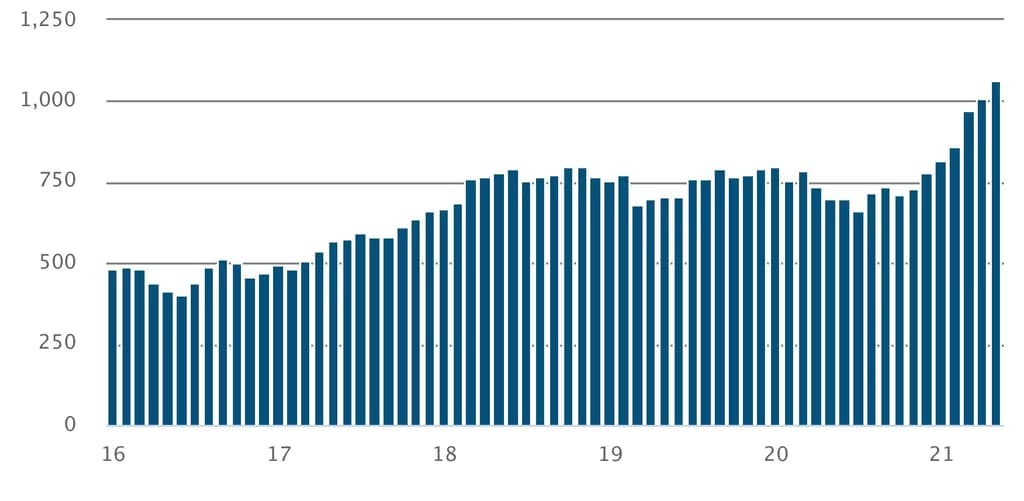
Post-pandemic boom in factory consents
Annual running total, $m
...and our reaction
- May non-residential consent data showed a strong result for non-residential consents, and consenting activity is now at a comparable level to pre-pandemic activity, quite a feat considering the struggling tourism sector.
- One build type that has shown consistent strength in consenting throughout 2021 so far has been factories. A recovering global and domestic economy has provided a strong incentive to ramp up factory production, coupled with supply related issues and COVID-19 which have provided a stronger argument for self-reliance in some sectors.
- Low interest rates are making it appealing to build for industries that have a positive outlook, but investment remains a tougher ask for retail, hotels, and social and cultural building which have all sat below pre-pandemic levels in recent months.
Latest updates
Premium

Non-residential building consents
Warehouses prevent further non-res falls in June
Mon 3 Aug 2026
Monthly
$701m Value of non-res consents in June 2026
 7.4% Total non-res consents from May 2026 (seas adj)37%pa Warehouse consents from June 2025
Premium
Non-residential building consents
Non-res consents weaker still in May
Thu 2 Jul 2026
Monthly
$789m Value of non-res consents in May 2026
19% Monthly consents from May 202549% Public sector consents from May 2025Non-residential building consents
Non-res consents mostly softer in April
Wed 3 Jun 2026
Monthly
$655m Value of non-res consents in April 2026
15% Monthly consents from April 2025 Office and education consents at lowest monthly levels in 5-6 years
Non-residential building consents
Consents strong in March, but shadow of conflict looms
Fri 1 May 2026
Monthly
$862m Value of non-res consents in March 2026
15% Monthly consents from Mar 2025$119m Hostel consents from Mar 2025