
Our take on the latest Employment indicators (Fri 28 Aug 2020)



Filled jobs rose 0.2% (sa) in July
Total earnings down 1.5%pa over the three months to July
Public sector activity is strong, but tourism is not
The key numbers...
- On a seasonally adjusted basis, job numbers rose 0.2% rose in July, slower than in May and June, as the rebound in economic activity mixed with the end of the wage subsidy.
- Seasonal patterns mean that actual job numbers fell in July, with actual filled jobs down 7,418 to 2.184m, as the number of primary and service sector roles fell.
- Total earnings remain lower too, with earnings for the three-months to July down 1.5%pa.
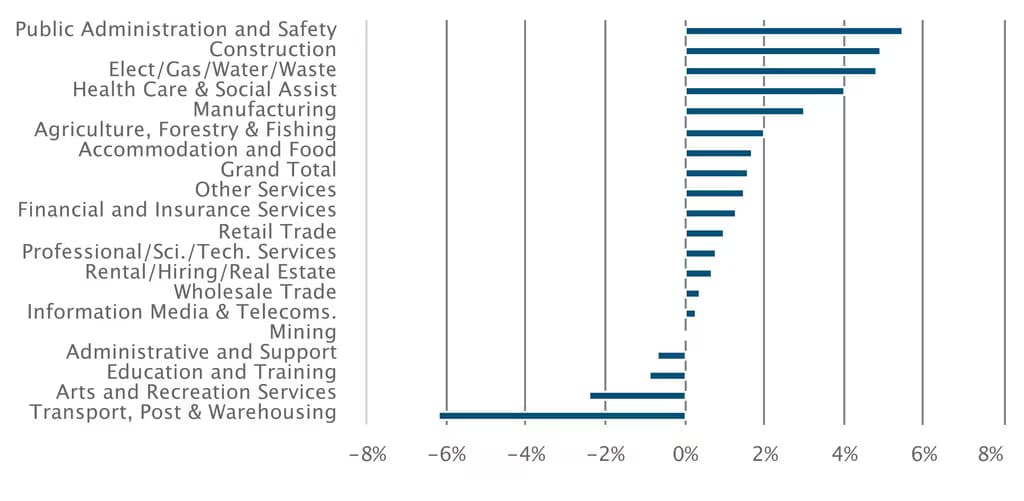
- The distribution of job losses is becoming clearer. At an industry level, public sector (+5.5%pa), health sector (+4.0%), and construction jobs (+4.9%) are holding up best, but transport (-6.2%pa), arts and recreational services (-2.4%), and education (-0.9%) have been hardest hit so far.
- Young people continue to see the greatest job losses, with a 2.2%pa decline in jobs held by those aged under 30, compared to a 2.9%pa gain in jobs for those over 30. Women under 30 are hardest hit, with a 2.5%pa decline in filled jobs, compared to a 2.0%pa fall for men under 30.
Change in filled jobs by industry
Annual % change
...and our reaction
- The rebound in economic activity in June and July has seen job numbers hold up, according to the monthly employment indicator series. However, softening growth is evident in the numbers, which aligns with businesses facing tough decisions as the wage subsidy ends.
- Lower earnings figures reinforce the fact that New Zealand households have more limited incomes at present, which will flow through to spending over the next few months. Financial hardship requests rose in July, backing up this point.
- Some industries, like those associated with the health response and the public sector, have come through well, whereas the tourism sector is still cutting staff as conditions for tourism activities are restrained. The 0.5%pa drop in professional services also demonstrates that it isn’t just lower-level jobs being lost either.
- The concentration of job losses on young people and women means that efforts to stimulate employment will need to respond to these groups, with additional work needed to ensure government-funded training and job opportunities align with these groups.
- The latest government support data highlights the fragile nature of the labour market, with another rise in weekly support announced today. In total, an additional 74,000 people since 20 March are on either the Jobseeker Support or COVID-19 Income Relief Payment.
Latest updates
Premium

Employment indicators
Further weak employment recovery
Tue 28 Jul 2026
Monthly
 0.1% Filled jobs rose in June 2026 (sa)0.6%pa Filled jobs were up from June 20251.5%pa South Island filled jobs incre from June 2025
Premium
Employment indicators
Public sector leads job gains
Mon 29 Jun 2026
Monthly
0.3% Filled jobs in May (sa)0.1% Filled jobs in April (sa)0.7% Filled jobs from May 2025Employment indicators
Healthcare leads job growth
Thu 28 May 2026
Monthly
0.2% Filled jobs in April (sa)0.5% Filled jobs from April 20255,527 Healthcare jobs over the year to AprilEmployment indicators
Let’s hear it for the South
Tue 28 Apr 2026
Monthly
0.3% Filled jobs in March (sa)0.2% Filled jobs in February (sa)1.5%pa South Island jobs in March