
Our take on the latest Residential building consents (Tue 31 Mar 2020)
Annual dwelling consents
37,882


As at February 2020
Total new dwelling consents up 6.0%pa in February
COVID-19 will slow near-term activity
The key numbers...
- New dwelling consents strengthened in February, with consent growth rising to 6.0%pa and maintaining consent levels at multi-decade highs.
- Standalone house consents led the way, with a 9.9%pa rise, taking year-end growth in standalone consents to 5.1%. Attached dwelling consent growth softened slightly, with year-end growth slowing to below 20%pa for the first time in six months.
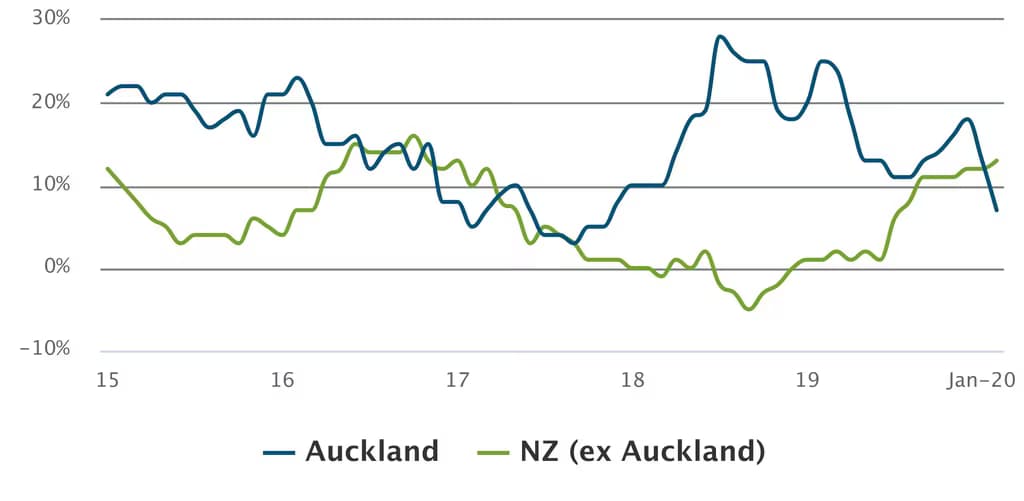
- Changing regional trends were already starting to point towards flatter construction activity, with total new consents declining slightly in Auckland (down 0.4%pa) over the three months to February 2020. Northland and Manawatū-Whanganui have also seen falling consent levels for the last few months, indicating that construction is nearing a turning point.
- Over the last six months, private sector construction has shifted ahead, with annual growth rates of over 10%, even as central government building growth has softened.
Consent growth by area
Year-end annual % change
...and our reaction
- Total consent numbers continue to show a healthy pipeline of residential construction work over the next 9-12 months across New Zealand.
- We had already been expecting residential consent levels to be close to peaking, as population growth slowed and high levels of building activity started to address the housing shortage in some areas. The latest consent trends reinforce this view.
- Today’s data represents the last set of pre-crisis information on the construction sector. March figures are set to be lower due to the introduction of COVID-19 restrictions, and we expect steep consenting falls in March and April.
- We had previously expected construction to be less immediately affected by the COVID-19 pandemic, but the Level 4 lockdown means that all construction projects will have halted, with workers sitting idle and firms without revenue.
- We currently expect house prices to fall between 5-10% as unemployment rises significantly. With population growth slowing significantly and a general tightening of belts across New Zealand, we now anticipate a sharper fall in construction activity over the next few years.
- We are currently assessing the full impact of COVID-19 on the construction industry and will be updating our forecasts as planned on April 17.
Latest updates
Premium

Residential building consents
Residential consents fall 3.6% in June
Mon 3 Aug 2026
Monthly
40,581 Annual consents over the June 2026 year
 19% June 2026 consents over the June 2026 year
 3.6% June 2026 consents from May on a seas. adj. basis
Premium
Residential building consents
Residential consents fall 4.0% in May
Thu 2 Jul 2026
Monthly
39,737 Annual consents over May 2026 year4.0% May 2026 consents from April on a seas. adj. basis22%pa Townhouse consents over May 2026 yearResidential building consents
Residential consents jump up 11% in April
Wed 3 Jun 2026
Monthly
39,087 Annual consents over April 2026 year11% April 2026 consents from March on a seas. adj. basis19%pa Multi-unit consents over April 2026 yearResidential building consents
Residential consent momentum trends sideways
Fri 1 May 2026
Monthly
37,813 Annual consents over March 2026 year 3,300pm Consents trend sideways on a seas. adj. basis14%pa Townhouse consents over March 2026 year