
Our take on the latest Non-residential building consents (Tue 14 Jan 2020)
Value of non-res consents
$643m


In November 2019
Total non-residential consents down 23%pa
One-off consent last November muddies headline figures
The key numbers...
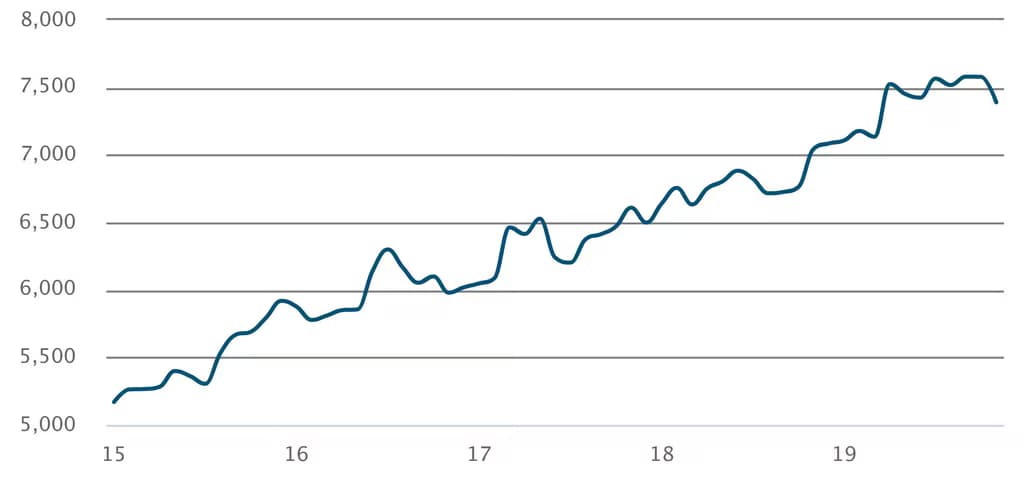
- Non-residential consents fell 23%pa in November, the sharpest annual decline since mid-2017. However, the performance in November is not as poor as it initially looks on paper.
- A $170m consent for a new education facility for AgResearch and Lincoln University in Canterbury, lodged in November 2018, artificially boosted last year’s figure. This project is no longer going ahead as planned, and when this large one-off project is removed from our analysis, approvals in November 2019 fell a milder 2.9%pa.
- Education building (due to the aforementioned one-off consent) and social, cultural, and religious (SCR) consents were the most downbeat building types in November, falling 28% and 27%pa respectively. However. without the AgResearch consent, education building consents would have been up 102%pa.
- Consents in Auckland were the hardest hit, down 28%pa with consents totalling $90m less than in November 2018.
Value of non-residential consents
Annual running total ($m)
...and our reaction
- Non-residential consent activity softened in November, but the underlying trend isn’t nearly as bad as headline figures suggest.
- We expect the $12b infrastructure announcement made by the government in December to have some effect on non-residential building consents looking forward, particularly for education buildings.
- We continue to expect non-residential consents to fall away over the coming year. However, this expectation could be curtailed by the infrastructure announcement, but whether talk will be transformed into dollars spent is yet to be seen.
- Business confidence has seen a revival in the last couple of months, which could provide a shot in the arm for the non-residential building industry. Although non-residential building activity looks set to soften further, the risks to the outlook for the sector remain on the upside.
Latest updates
Premium

Non-residential building consents
Warehouses prevent further non-res falls in June
Mon 3 Aug 2026
Monthly
$701m Value of non-res consents in June 2026
7.4% Total non-res consents from May 2026 (seas adj) 37%pa Warehouse consents from June 2025
Premium
Non-residential building consents
Non-res consents weaker still in May
Thu 2 Jul 2026
Monthly
$789m Value of non-res consents in May 2026
19% Monthly consents from May 202549% Public sector consents from May 2025Non-residential building consents
Non-res consents mostly softer in April
Wed 3 Jun 2026
Monthly
$655m Value of non-res consents in April 2026
15% Monthly consents from April 2025 Office and education consents at lowest monthly levels in 5-6 years
Non-residential building consents
Consents strong in March, but shadow of conflict looms
Fri 1 May 2026
Monthly
$862m Value of non-res consents in March 2026
15% Monthly consents from Mar 2025$119m Hostel consents from Mar 2025