Rental inflation hits a 10-year high
17 Jan 2019


Rental inflation at 5.1%pa
Gross rental yields at 3.50%
Wellington rental inflation at 10%pa
The key numbers...
- Rental inflation in some provincial areas is likely to remain relatively strong in the near-term, but is likely to slow later in 2019 and 2020 as population growth eases and the broader housing market softens.
- Slowing growth in house prices alongside rising rents means that rental yields have edged up to a 17-month high, with Auckland yields at a 20-month high.
- Falling bond rates mean that the premium on investing in residential rental property is at its largest since 2016.
- Nevertheless, investor demand for rental property will remain subdued, with the positive effects of improving income returns outweighed by tighter government rules on investors as well as the potential for house prices to decline.
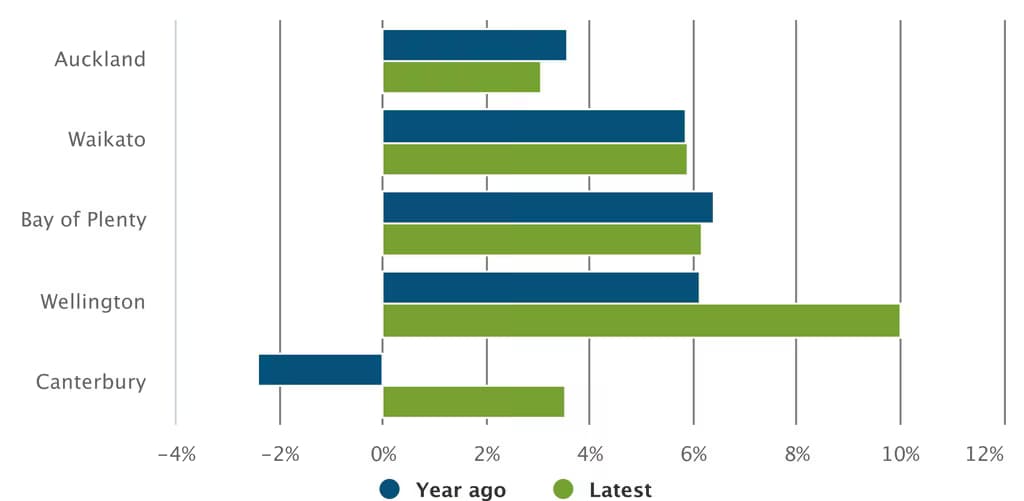
Annual rental growth
Three-month annual % changes
...and our reaction
- Residential rental inflation reached 6.1%pa in November, its fastest rate since 2008, before easing back to 5.1%pa in December.
- Wellington and the lower North Island were key drivers of the pick-up. Rental inflation in the Wellington region reached 10%pa for the first time since 2008, while rental inflation of 12%pa represents an all-time high in both Hawke's Bay and Manawatū-Whanganui (our data begins in 1994).
- The Canterbury market is showing signs that its oversupply of accommodation is starting to shrink, with rents rising at their fastest rate since early 2015 (3.6%pa).
- Auckland rental inflation remains subdued, at 3.1%pa, despite the undersupply of housing in the region.