
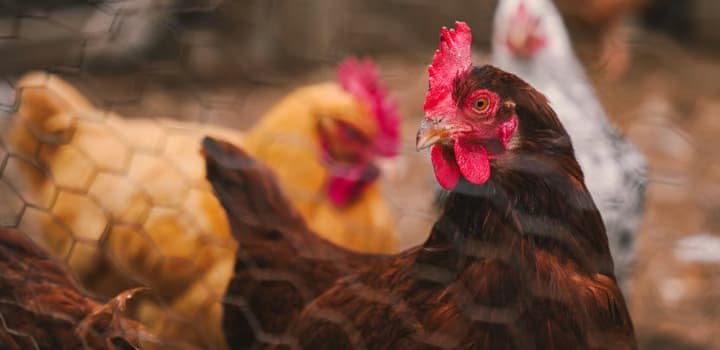
Chicken has well and truly ruled the roost in New Zealand, with the amount processed for local consumption hitting a record high in 2026. Our growing appetite for poultry isn’t just a matter of changing tastes either – the economics are increasingly hard to ignore. Over the last few decades, chicken prices have risen only modestly while the cost of beef, lamb, and other red meats has climbed substantially, steadily reshaping what ends up on Kiwi dinner plates. In our August 2026 Chart of the Month, we examine how cheaper chicken has taken flight, overtaking domestic red meat consumption by an increasingly wide margin – even as New Zealand’s red meat sector continues to earn its keep selling high-priced protein to the rest of the world.
We’ve hit a new level of Record Chicken
Processed poultry volumes have been increasing recently, first to a seven-year high and then in the June 2026 year to a new record total of chicken processed. Over the June 2026 year, processed chicken volumes rose 9.1%pa, the fastest annual rise since the end of 2021. Overall, a total of nearly 245,000 tonnes of chicken was processed for consumption, made up of 173,000 tonnes of fresh chicken – 71% of the total – with the remainder being frozen chicken.
New Zealand chicken consumption is now 1.1% higher than at any other time, surpassing the prior peak of 242,400 tonnes of processed chicken over the March 2019 year.
The increase in chicken production has come at the expense of red meat consumption, as meat slaughter volumes graded for domestic consumption have eased while chicken volumes have increased. The switch in dominant meat was in mid-2001, when chicken volumes overtook domestic red meat slaughter volumes.
Back in 1986, there were 4.4 tonnes of domestic red meat processed for every tonne of chicken. In 2026, there are now 3.5 tonnes of chicken processed for every tonne of domestic red meat processed.
Part of this trend is clearly due to prices. Over the 36 years between 1989 and 2025, Stats NZ data shows that food prices for mutton, lamb, and hogget have increased 366%, beef and veal is up 234%, and pork is up 98% over the period.
Chicken prices have increased by 36% - an average of just 0.8%pa, compared to the 1.9%pa to 4.4%pa annual average increase seen across other meats.
However, red meat exports still dominate
Before too much concern for New Zealand’s red meat sector emerges, it’s important to reinforce that red meat processed for export is still far larger than any other category. Stats NZ data shows 1.10m tonnes of red meat processed for export markets over the March 2026 year, around 3.5 tonnes of red meat for export for every tonne of red meat or chicken processed for local consumption.
And although meat processing volumes have been trending slightly lower in recent years, high protein prices globally have kept returns higher. Infometrics analysis of AgriHQ data demonstrates this fact, with lamb prices up 30%pa on average over the June 2026 year, mutton up 54%pa, and beef prices up 27%pa.
Bird flu presents a challenge
Although the data is clear that New Zealand households’ budgets and preferences currently favour chicken, the recent arrival of H5N1 avian influenza (bird flu) presents a reason to be cautious. The current strain of bird flu can infect a broader range of birds and spread across larger areas, creating risks for New Zealand’s poultry sector. If such a spread occurred, depopulation of infected birds would be likely, which could hit poultry supply and add pressure to prices.