Iran War set to deliver higher inflation and interest rates despite weaker economy

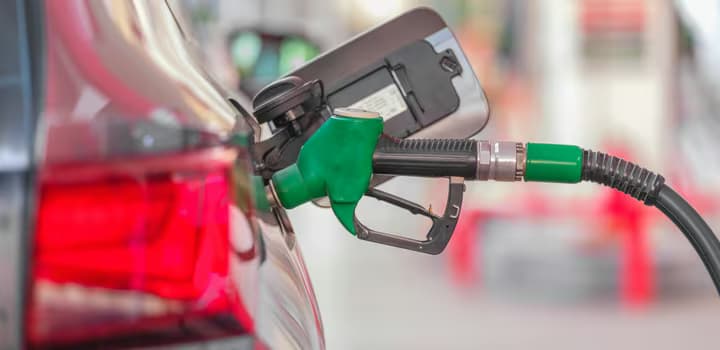
The Reserve Bank has a big job ahead of it bringing pricing behaviour and inflation pressures under control, according to Infometrics’ latest economic forecasts. The economic forecaster predicts that higher fuel prices will drive inflation up to 4.8%pa in the current quarter – an immediate outcome of the 2026 Iran War that the Bank can do little about. But even with an assumption that fuel prices moderate in the second half of 2026, inflation is still forecast to be at 3.9%pa in March next year and 3.0%pa by December 2027, with second-round effects from the fuel price spike rippling across the economy for several quarters.
“Inflation expectations are more elevated than they were at any time during the 2010s, and the 2021-23 experience of less pricing discipline is still fresh in business-people’s minds,” said Infometrics Chief Forecaster Gareth Kiernan. “We’re also conscious that, after three years of weak demand conditions, firms have limited scope to absorb current cost increases. In general, we expect firms to try and raise prices despite the risk of losing customers, because the alternative of holding prices will makes firms unprofitable and effectively guarantee their own demise.”
Infometrics expects the Reserve Bank to lift the official cash rate three times this year starting in July, with the OCR reaching 4% by mid-2027 and as high as 4.5% in the first half of 2028. Increases starting in May cannot be ruled out. Inflationary pressures had already been surprisingly and uncomfortably persistent even prior to the fuel price shock, particularly in the context of the spare capacity that had developed in the economy over the previous three years. Currently, weaker demand conditions provide no guarantee that inflation will also track lower.
“We now expect household spending to grow just 0.8% this year, a full two percentage points slower than our pre-conflict forecasts,” said Mr Kiernan. “Household budgets have already been hit by higher fuel costs, and they will be squeezed further by other price increases over coming quarters. Consumer confidence and spending will also come under pressure from further delays to any improvement in the labour market, as well as the prospect of rising interest rates.”
GDP growth will also be slower this year than previously hoped, with Infometrics revising down its forecast from 2.5% to 1.3%pa. This weaker outlook assumes no serious or prolonged disruption to the availability of fuel in New Zealand, but it is possible that the government’s Fuel Response Plan is elevated to Phase 2 or 3 at some stage.
“It goes without saying that there is currently a huge amount of uncertainty, making forecasting more challenging than at any time since the first COVID-19 lockdown,” said Mr Kiernan. “But economic growth over the next 18 months will undoubtedly be weaker than previously expected, with the psychological and real effects of the fuel price shock of the last seven weeks unlikely to unwind immediately. We’d hope that inflation is less persistent than we are forecasting, but the experience of the last few years shows the problems that complacency can bring, with higher inflation eroding real incomes and requiring a bigger economic downturn later on.”
ENDS
More details about Infometrics forecasts can be found on the respective Building, Transport, and Macroeconomic forecasts pages on the Infometrics website.
Related articles